Few travel experiences are as memorable as encountering animals in their natural habitats. Elephants roaming the African savanna and marine life moving through coral reefs are remarkable sights, especially when you have time to observe without disturbing them.
Taking your time means noticing smaller details, including how animals interact with one another and move through their surroundings. With knowledgeable local guides and responsible wildlife operators, you can enjoy these experiences while respecting the animals and the places they call home.
These five wildlife encounters offer a closer look at some of the world’s most fascinating species and habitats, with conservation and responsible travel at the heart of each experience.
Following the World’s Largest Land Mammal Migration in the Serengeti, Tanzania
Across the vast grasslands of the Serengeti, enormous herds of wildebeest move alongside zebras and gazelles in search of fresh grazing and water. Their annual migration takes them across open plains and rivers, following seasonal changes in rainfall. Lions, cheetahs, and other predators inhabit this remarkable ecosystem, adding to its rich wildlife diversity.
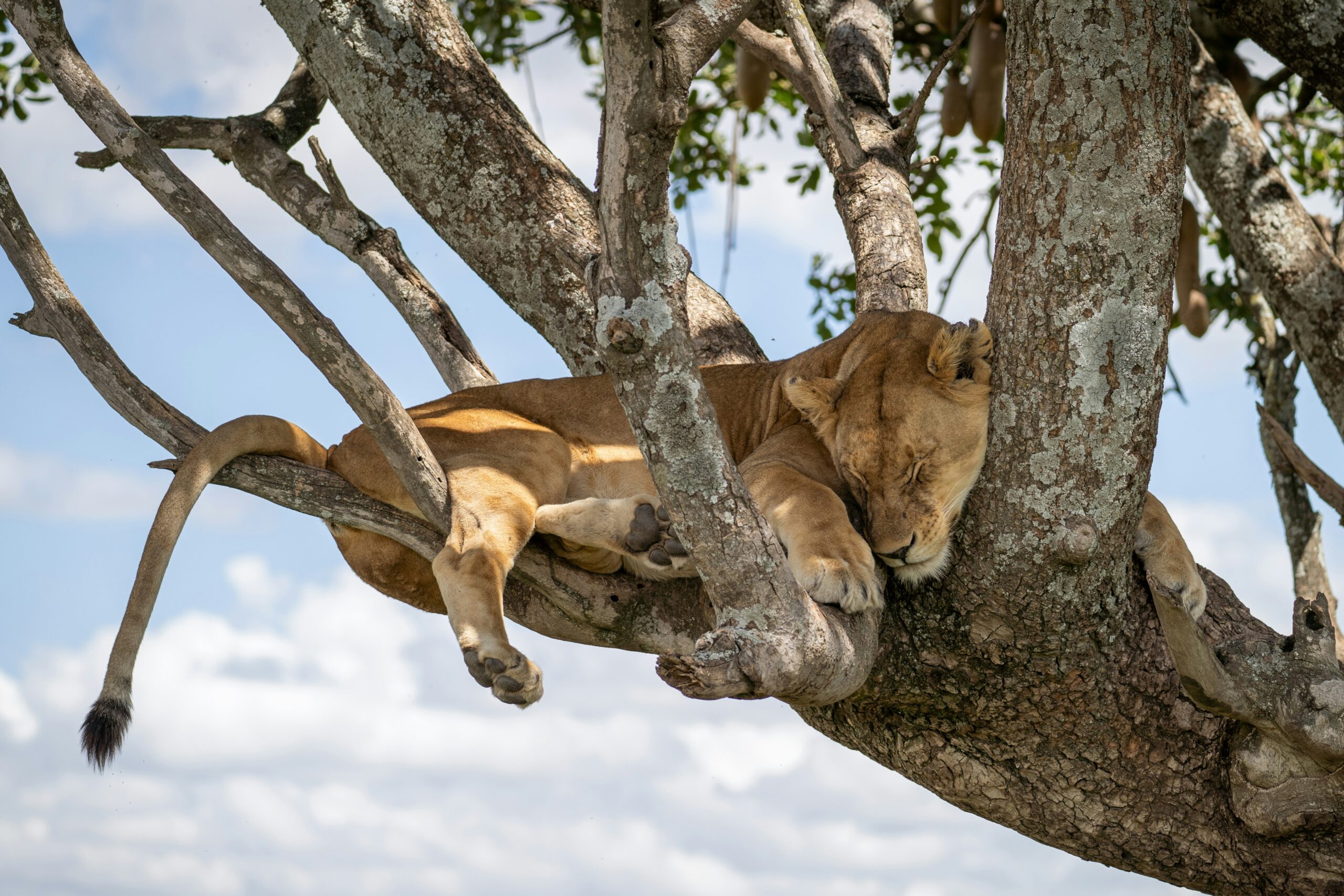
Spending more time in one area can be particularly rewarding for those dreaming of Tanzania luxury safari vacations. Guided safari drives give you opportunities to observe herds grazing across the plains, lions resting in the shade, or cheetahs surveying the grasslands. With an experienced guide, you can also learn about the animals’ behavior and how different species interact within the ecosystem.
The migrating herds move through different parts of the Serengeti throughout the year, so the season and location can shape your experience. Mobile safari camps offer comfortable accommodations in selected areas, with guides familiar with local wildlife movements. While sightings are never guaranteed, spending several days in the region gives you more opportunities to appreciate the wildlife and surrounding landscapes.
Watching Brown Bears Fish at Brooks Falls in Alaska, USA
Deep within Alaska’s Katmai National Park, Brooks Falls is one of the best-known places to observe brown bears in the wild. During the summer salmon run, bears gather along the Brooks River to feed on sockeye salmon making their way upstream. The waterfall creates a natural obstacle for the fish, attracting bears to the rushing water.
From the elevated viewing platforms, visitors can watch the bears fishing in different ways. Some wait near the top of the falls for salmon to leap, while others search for fish in the shallower water downstream. You might also notice how the bears respond to one another, with larger individuals occupying favored fishing spots and others moving along the river.
July is particularly rewarding for bear viewing at Brooks Falls, when migrating salmon attract large numbers of bears. The designated platforms allow visitors to observe them while giving the animals space to feed and move naturally. Because activity changes throughout the season, spending more time in the area can reveal different behaviors and interactions along the river.
Meeting Marine Iguanas That Forage Underwater in the Galápagos Islands, Ecuador
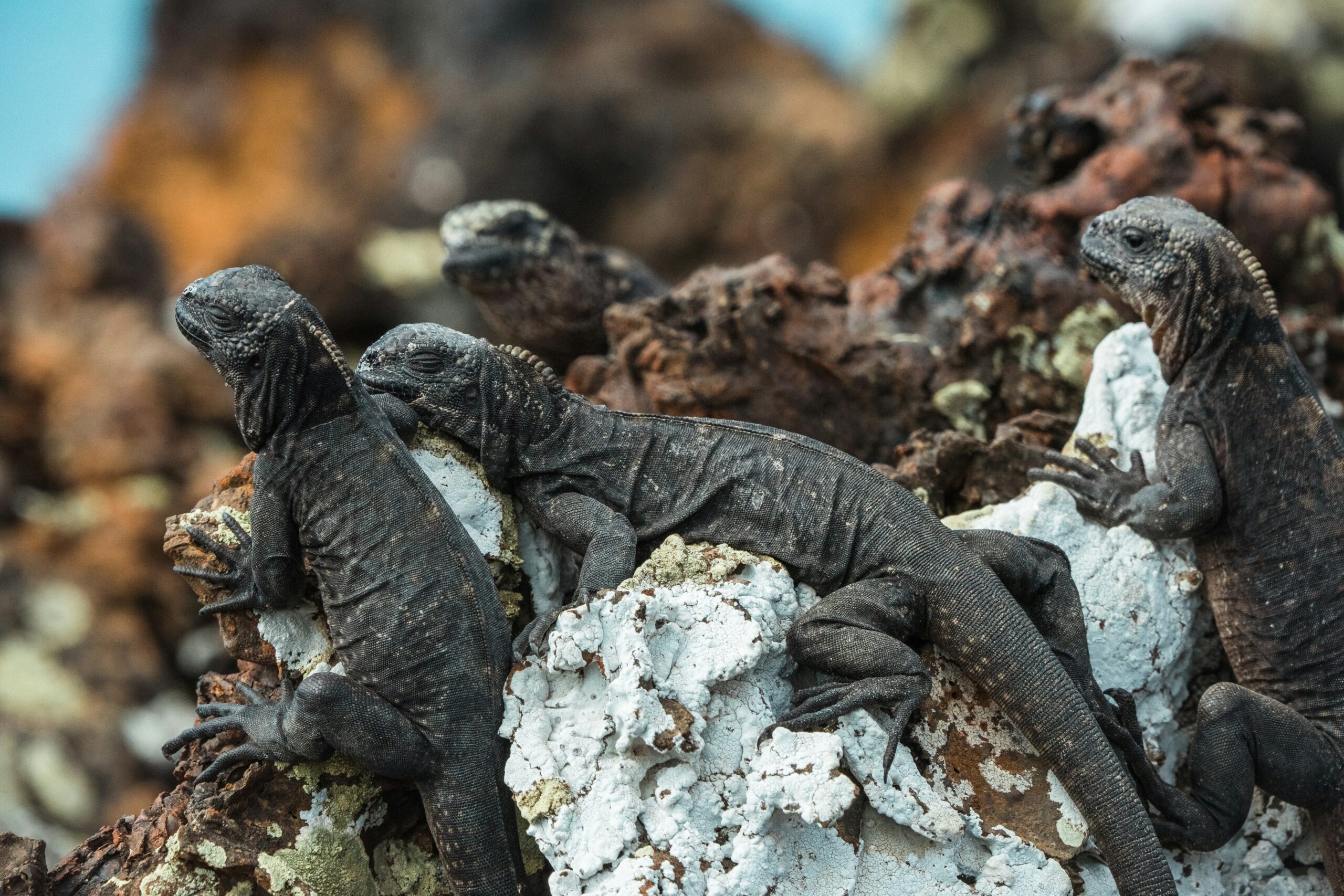
The Galápagos Islands are home to marine iguanas, the world’s only lizards that feed in the ocean. These distinctive reptiles are commonly seen resting on black volcanic rocks along the shoreline, warming themselves in the sun after feeding. Their flattened tails help them swim through the water, where they graze on algae growing on submerged rocks.
Snorkeling in the Galápagos gives you a chance to observe these unusual animals in their natural habitat. You might spot an iguana swimming beneath the surface or feeding among the rocks, while others remain onshore in groups. Seeing how comfortably they move between land and sea reveals just how well adapted they are to the islands’ coastal environment.
Understanding which islands and snorkeling sites are included in an itinerary can be helpful when researching trips to the Galápagos, as wildlife encounters vary by location. Licensed naturalist guides offer insight into the animals’ behavior while helping visitors maintain respectful distances and allow them to move freely. The experience is equally rewarding from shore, where marine iguanas can be observed basking on volcanic rocks.
Spending an Hour With Mountain Gorillas in Volcanoes National Park, Rwanda
High in Rwanda’s Virunga Mountains, Volcanoes National Park protects endangered mountain gorillas living among bamboo forests and densely vegetated volcanic slopes. These primates live in family groups, with silverbacks, females, and younger gorillas spending much of their day feeding, resting, and moving through the forest.
Accompanied by experienced trackers and guides, visitors hike through the forest to reach one of the park’s habituated gorilla families. Once there, you might observe a silverback resting among the vegetation, younger gorillas playing nearby, or a mother tending to her infant. The chance to witness these everyday interactions in the wild makes the encounter especially memorable.
Visits are limited to one hour with the gorillas, allowing travelers to observe them while minimizing disturbance to their natural behavior. The trek itself varies in length and difficulty depending on the family’s location, with guides helping visitors navigate the terrain. Small groups and respectful viewing distances are central to the experience, supporting efforts to protect these endangered animals.
Spotting Jaguars by Boat in the Pantanal, Brazil
The Brazilian Pantanal is the world’s largest tropical wetland, with winding rivers, flooded grasslands, and forests that provide habitat for an extraordinary variety of wildlife. Jaguars are among its most remarkable residents, sharing the wetlands with capybaras, caimans, giant river otters, and hundreds of bird species.
Exploring the waterways by boat gives you a chance to observe these animals in their natural surroundings. You might spot a jaguar resting along a riverbank or moving through the vegetation, while capybaras graze near the water and caimans bask along the muddy shores. With a knowledgeable local guide, you can learn more about the animals’ behavior and their role in the wetland ecosystem.
The northern Pantanal, particularly the waterways around Porto Jofre, is known for boat-based jaguar viewing. The drier months, especially June through September, generally offer better opportunities to spot these elusive cats along the rivers. Responsible guides maintain respectful viewing distances and give the animals space to move undisturbed, allowing visitors to observe their natural behavior.
Which encounter would you travel for?
Brown bears catching salmon in Alaska, mountain gorillas moving through Rwanda’s forests, and jaguars resting along Brazil’s riverbanks offer fascinating glimpses into the lives of wild animals. What they share is the opportunity to spend time in diverse natural habitats and observe animals going about their lives.
The most rewarding wildlife journeys leave room for unexpected moments and give animals the space they need. Choosing responsible operators and supporting local conservation efforts can also help protect these places and their wildlife, so future generations have the chance to experience them.