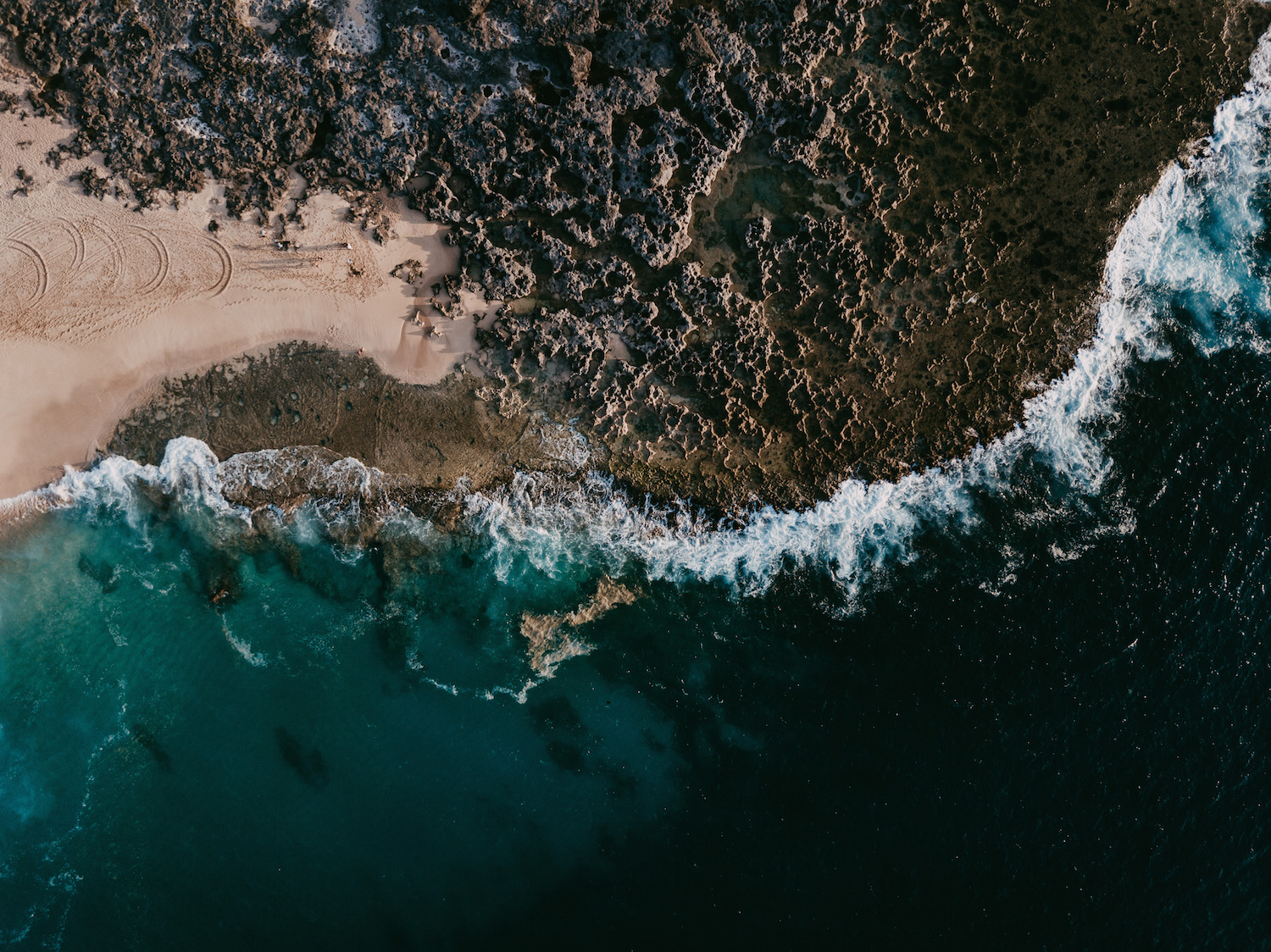
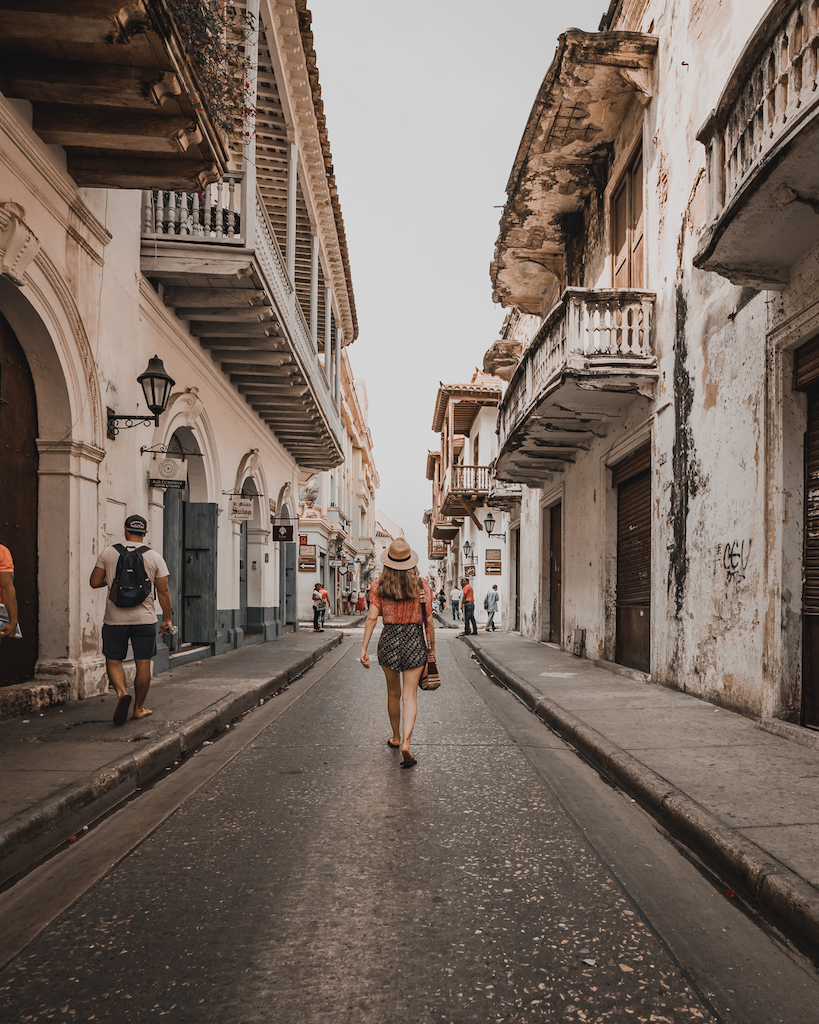
From glass-walled safari lodges and modern farmstays to forest cabins and coastal sanctuaries, these remarkable properties allow architecture to recede while the landscape takes center stage.
There is a difference between a hotel surrounded by nature and one that truly belongs to it.
The most compelling properties begin with a deeper consideration of place: the contours of the land, the direction of the light, the movement of wildlife, the materials found nearby, and the architectural traditions that have evolved in response to a particular climate. Rather than treating nature as scenery, these properties make it the foundation of the experience.
These are 10 extraordinary hotels that blend with nature, offering a more immersive and considered way to experience some of the world’s most remarkable landscapes.
1. Wilderness Bisate Lodge
Volcanoes National Park, Rwanda
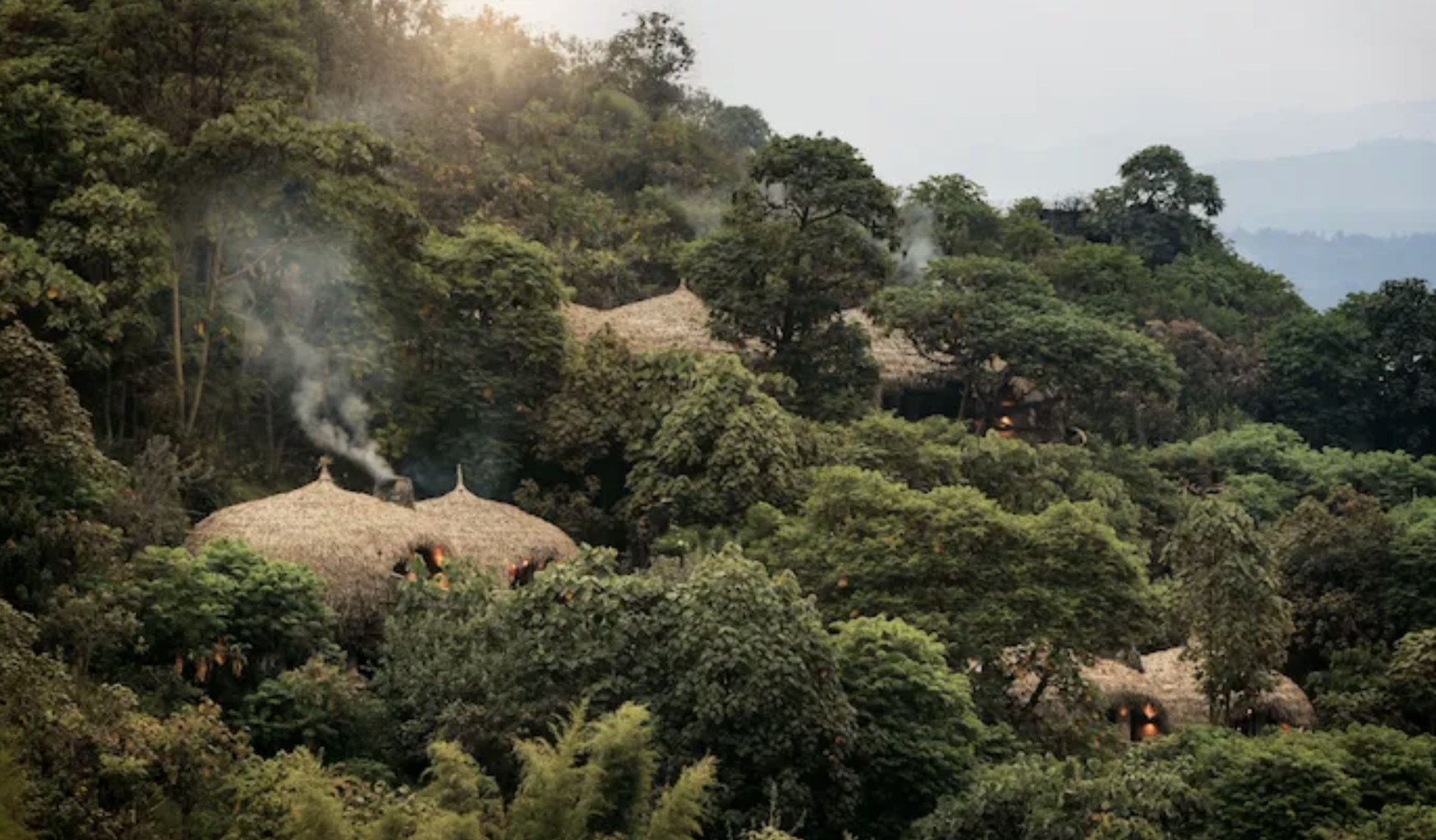
Set within the dramatic folds of Rwanda’s volcanic highlands, Wilderness Bisate Lodge appears less constructed than woven into the hillside. Six conical thatched villas emerge from a lush, reforested landscape overlooking the peaks surrounding Volcanoes National Park.
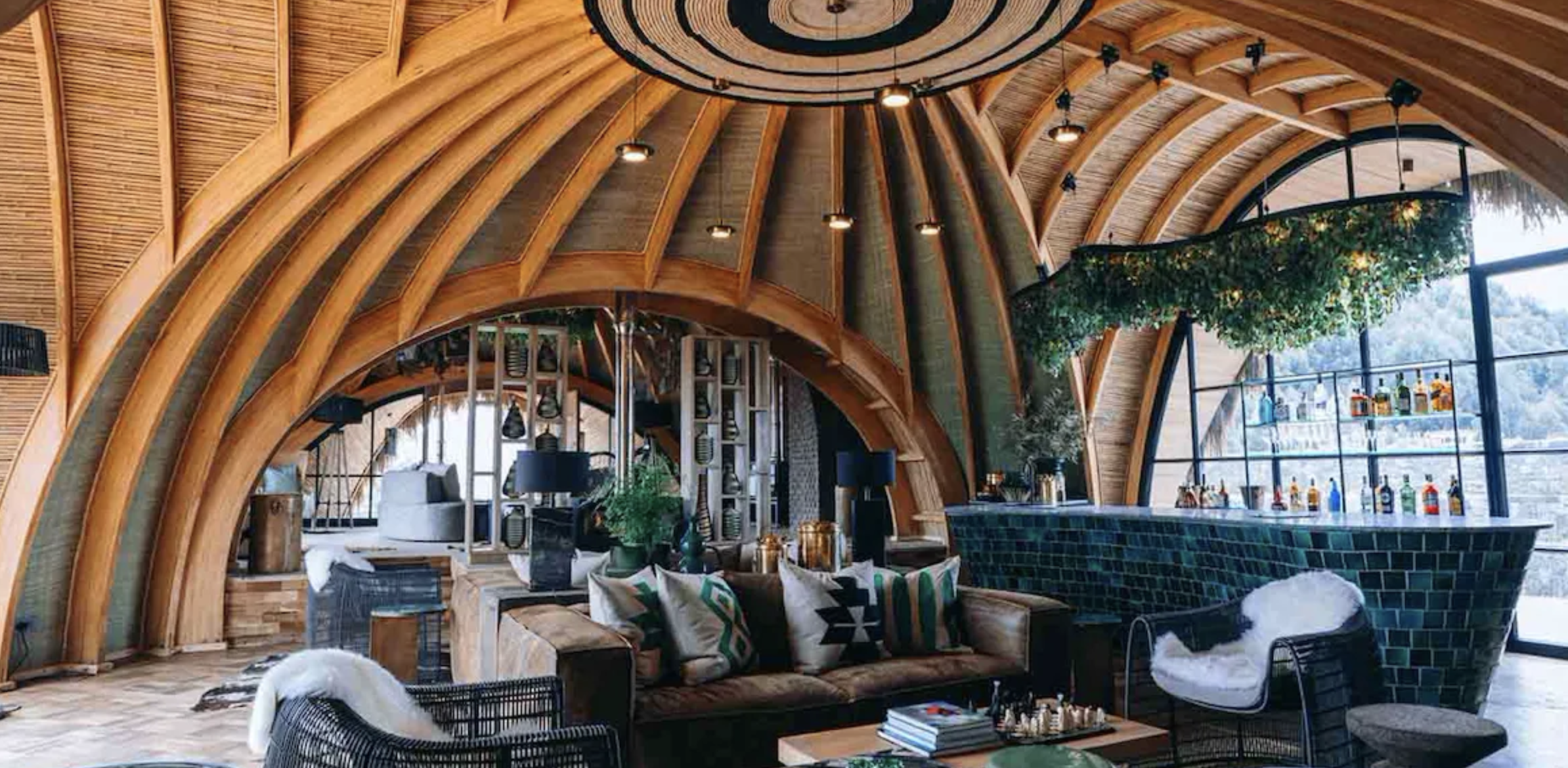
The villas take inspiration from traditional Rwandan royal architecture, translating its rounded forms into sculptural structures layered with timber, woven surfaces, volcanic stone and saturated textiles. Spacious verandas open toward the mountains, while the cocooning interiors provide warmth against the mist and cool air of the highlands.
What makes Bisate especially meaningful is the restoration taking place beyond its walls. The surrounding land, once used for agriculture, has been progressively reforested to help reestablish native habitat near the national park. From here, guests can trek into the mountains to encounter endangered mountain gorillas before returning to a lodge where conservation, craft and landscape feel inseparable.
Design detail to notice: The villa ceilings, where exposed timber ribs and woven elements reinforce the feeling of being sheltered inside an immense handcrafted nest.
2. andBeyond Phinda Forest Lodge
KwaZulu-Natal, South Africa
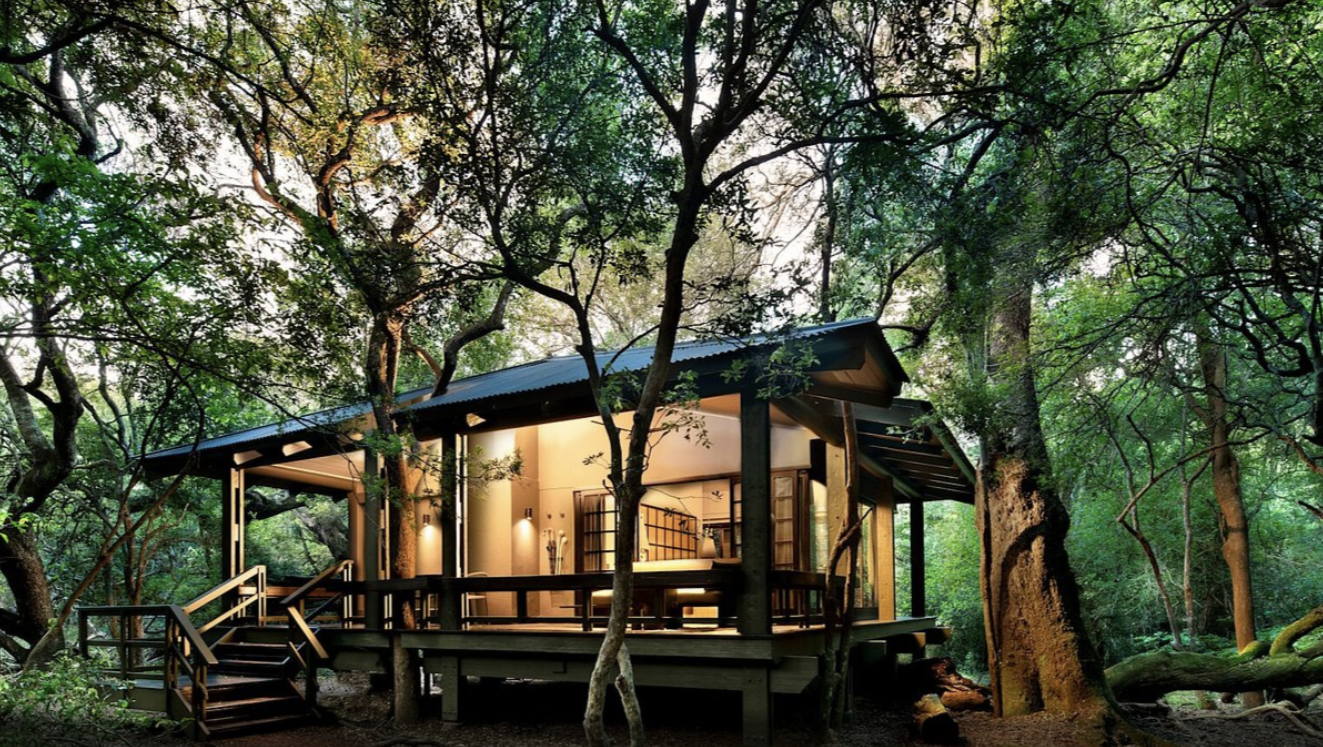
Hidden within a rare dry sand forest, andBeyond Phinda Forest Lodge offers an entirely different expression of nature-inspired hotel design. Where Bisate is richly sculptural, Phinda is almost weightless.
Its glass-walled suites stand among ancient trees, allowing the dense forest to remain visually uninterrupted. Reflections of leaves and filtered light soften the boundaries between the buildings and their surroundings, while elevated walkways encourage guests to move carefully through the habitat rather than across it.
The lodge sits within Phinda Private Game Reserve, a nearly 74,000-acre protected landscape encompassing seven distinct habitats. Its recent rebuild preserved the essential concept that made the property so distinctive: architecture that defers to one of South Africa’s rarest ecosystems.
Inside, natural textures, sculptural lighting and a muted palette echo the forest without attempting to imitate it. Wildlife may pass quietly between the suites, a reminder that the hotel remains a guest within a much older living system.
Design detail to notice: The expansive glass walls, which reflect the surrounding foliage and make the suites appear to dissolve into the forest.
3. Amanoi
Ninh Thuận, Vietnam
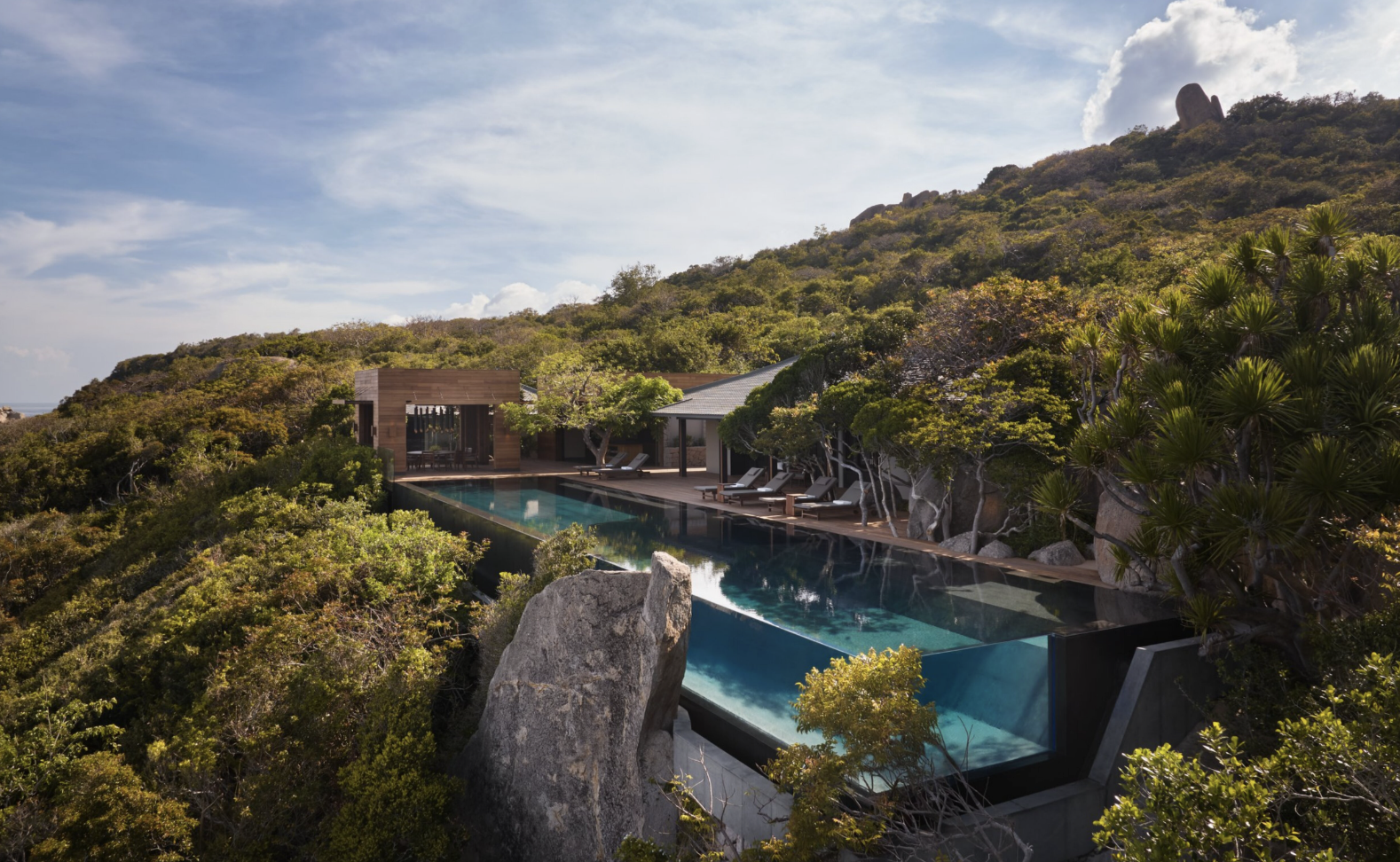
Set between the forested hills of Núi Chúa National Park and the protected waters of Vinh Hy Bay, Amanoi occupies one of Vietnam’s most striking coastal landscapes.
The resort unfolds across a rugged hillside in a series of restrained pavilions, villas and residences. Sweeping rooflines draw from traditional Vietnamese architecture, while stone terraces, timber screens and broad openings frame the surrounding mountains, forest and sea. Rather than concentrating the experience in a single monumental building, Amanoi reveals itself gradually along quiet pathways and through shifting views.
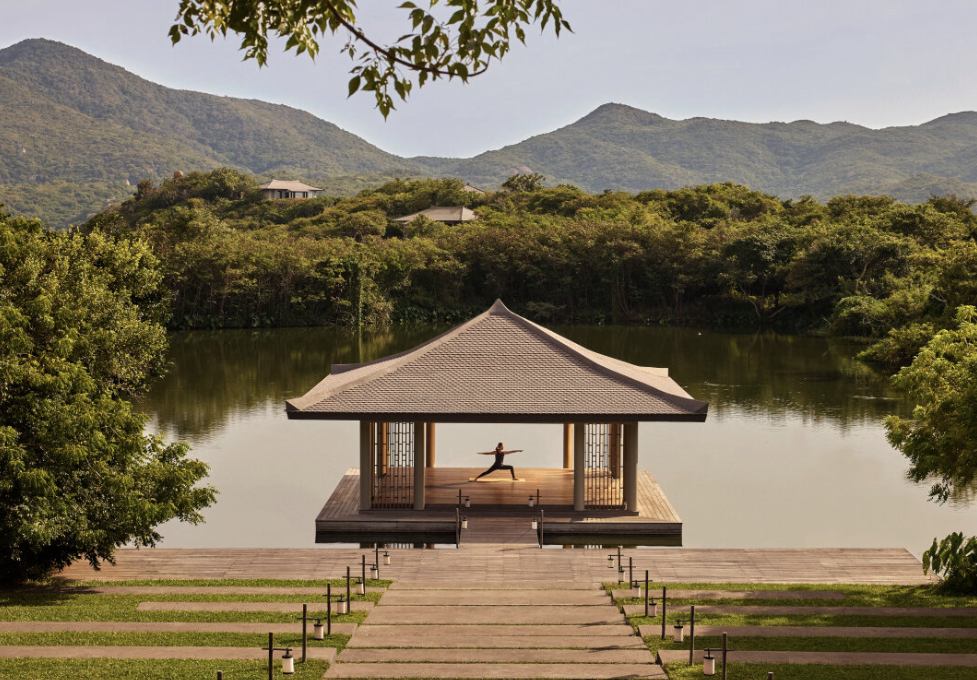
The architecture is polished but never visually restless. Its strongest moments are often the simplest: a dark roofline against a pale sky, a shaded terrace overlooking the bay or a pavilion emerging briefly through the trees.
Although Aman is synonymous with rarefied luxury, Amanoi feels particularly attuned to its setting. The property does not attempt to tame the wild contours of the coastline. Instead, its buildings frame and intensify an already extraordinary landscape.
Design detail to notice: The central pavilion’s dramatic roof, which appears to hover above the surrounding hills while echoing the profile of the mountains beyond.
4. Juvet Landscape Hotel
Valldal, Norway
At Juvet Landscape Hotel, the room itself becomes a viewing instrument.
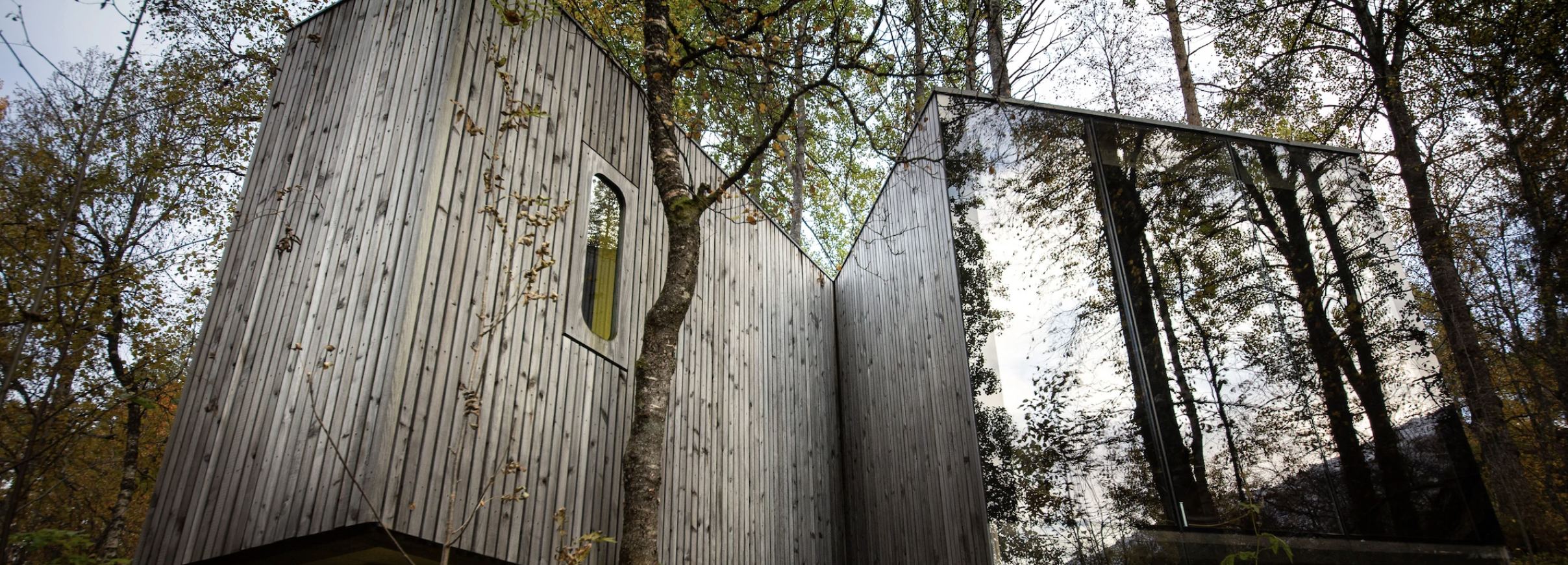
Rather than building one conventional hotel, architects Jensen & Skodvin positioned a collection of compact timber-and-glass structures individually throughout the landscape of Valldal in northwestern Norway. Each room occupies its own carefully chosen site, facing a private composition of birch forest, river, rock or mountain.
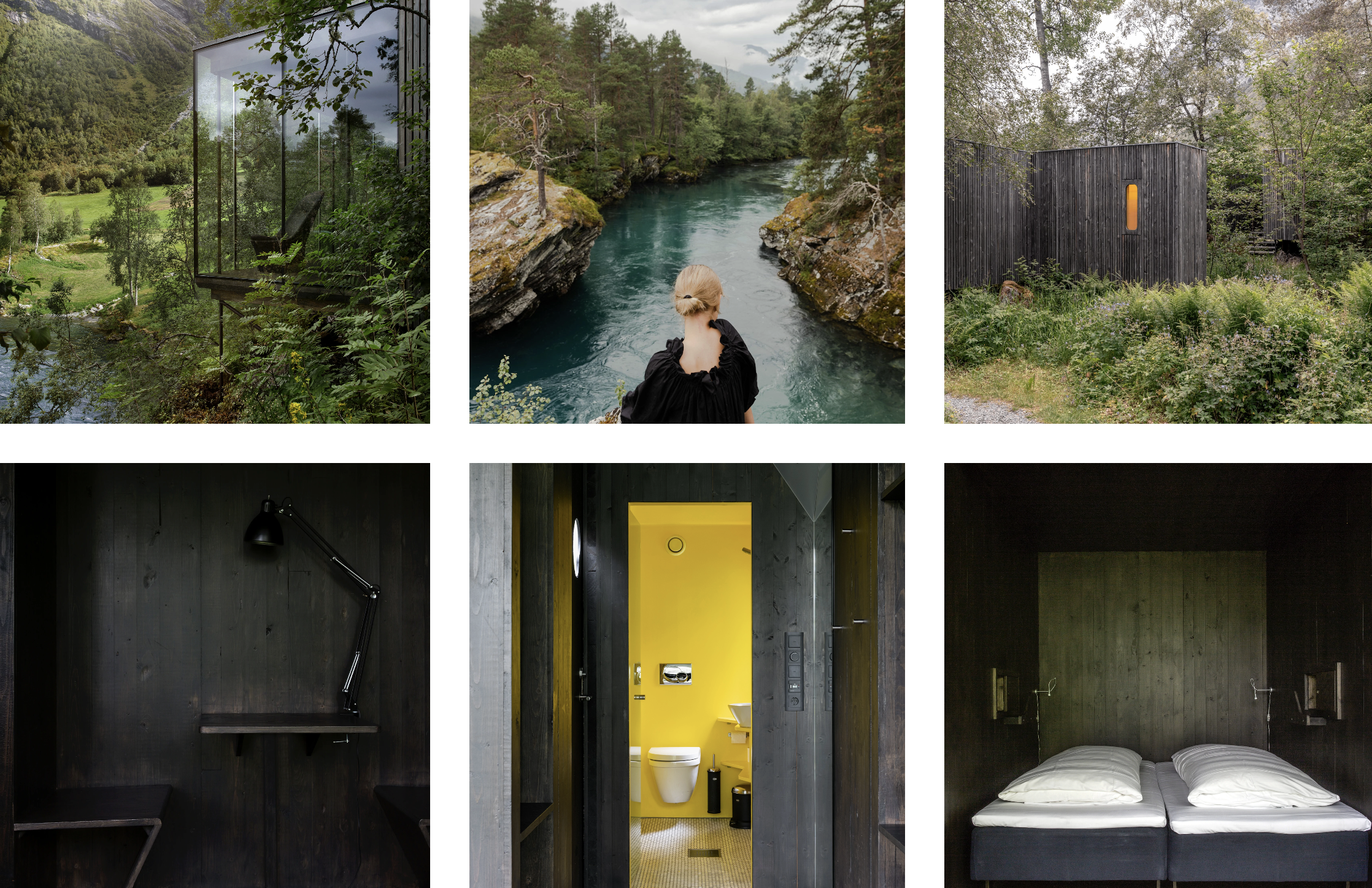
Dark exterior surfaces and expansive glass help the buildings recede among the trees. From inside, architectural distractions are kept to a minimum so that moving water, shifting light and changing weather become the primary visual elements. The property is a meeting of “raw nature, cultural history and modern architecture,” surrounded by largely untouched wilderness.
The effect is intimate rather than theatrical. Guests are not presented with one prescribed panorama; they are given a quiet place from which to observe the particular landscape immediately outside their room.
Juvet demonstrates that hotels that blend with nature do not need to disappear completely. They can remain distinctly architectural while still directing attention away from themselves.
Design detail to notice: The irregular placement of each Landscape Room, ensuring that no two guests encounter precisely the same view.
5. Bambu Indah
Bali, Indonesia
Bambu Indah resists nearly every convention of the modern resort.
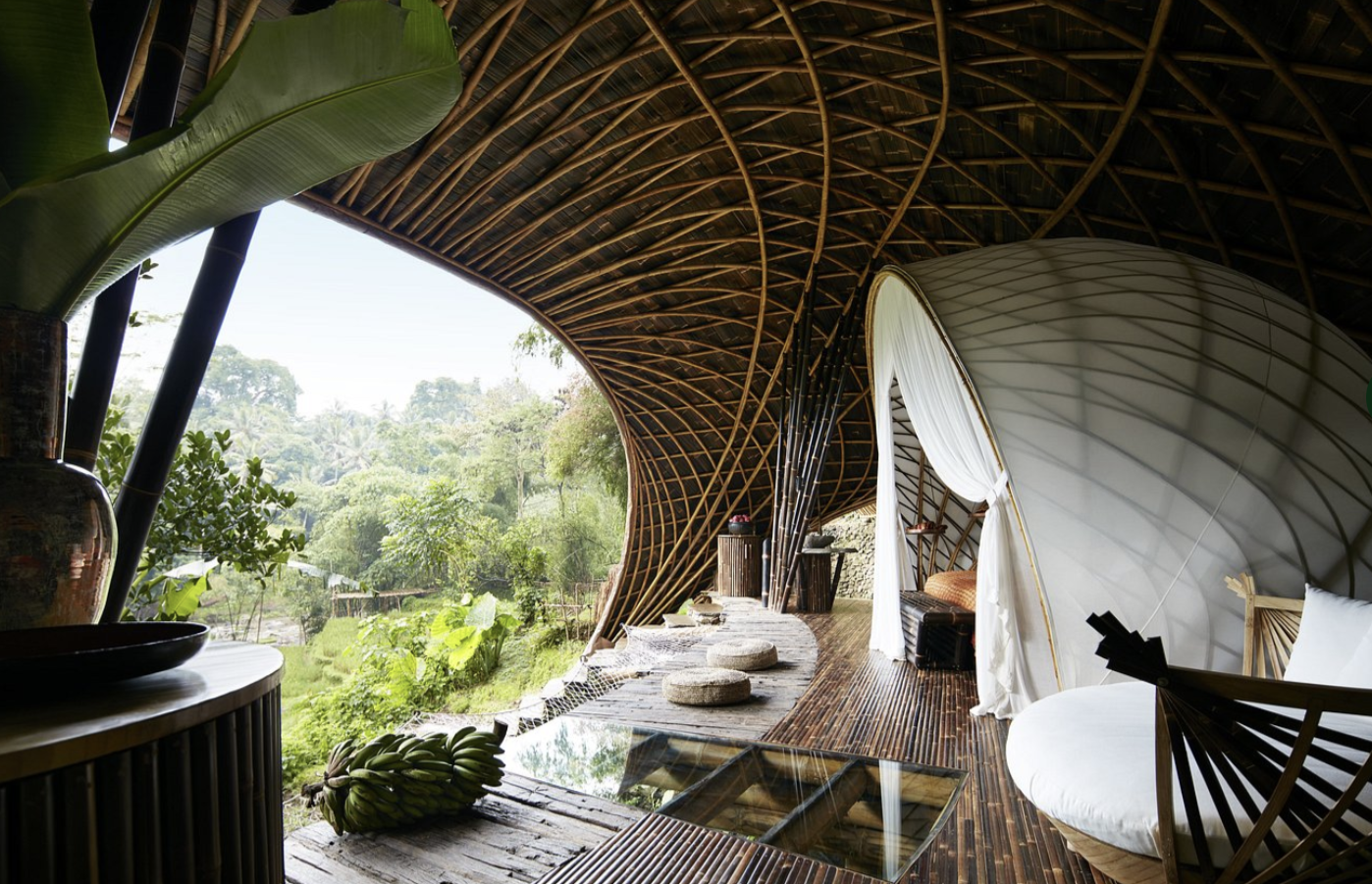
Located along Bali’s Sayan Ridge near Ubud, the property combines antique Javanese teak houses, experimental bamboo structures, treetop rooms, tents, gardens, rice paddies and spring-fed natural pools. The result feels less like a designed hotel than an evolving, handcrafted village.
Originally created by John and Cynthia Hardy, Bambu Indah celebrates natural materials not as decorative accents but as the basis of its architecture. Bamboo bends, arches and stretches across spaces in ways that feel both ingenious and organic, while historic Javanese homes introduce a sense of memory and cultural continuity. The property now includes a varied collection of houses, nests and tents positioned throughout its layered landscape.
Paths descend through tropical planting toward the river, crossing bamboo bridges and passing edible gardens, ponds and natural swimming areas. There are few hard divisions between cultivated and wild spaces.
Unlike the quiet minimalism associated with many sustainable design hotels, Bambu Indah is exuberant, tactile and imaginative. It proves that architecture rooted in nature can be playful as well as restrained.
Design detail to notice: The bamboo structural systems, where columns, ribs and woven surfaces become both engineering and ornament.
6. Susafa
Sicily, Italy
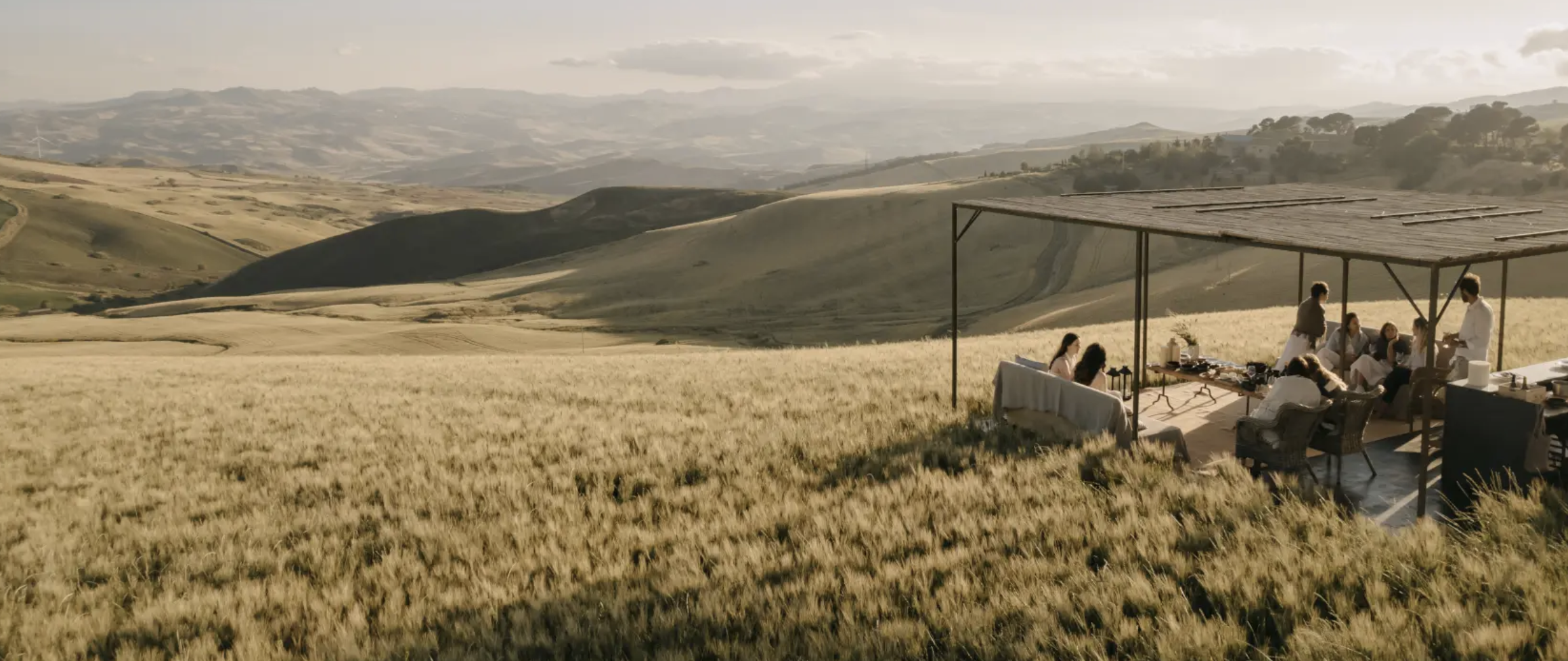
Surrounded by wheat fields in Sicily’s quiet interior, Susafa offers a slower and more agricultural interpretation of landscape-led hospitality.
The property occupies a former farmhouse in the Palermo countryside, where stone buildings, old storerooms and working agricultural spaces have been restored as an intimate rural retreat. The architecture remains understated, preserving the masseria’s simple forms and sense of history rather than over-polishing them.
Life at Susafa continues to follow the seasons. Guests walk through fields, gather around tables informed by the farm’s harvests and eat bread made on the property with Susafa olive oil. Gardens, orchards and grain fields are not ornamental additions; they are part of the estate’s identity and daily rhythm.
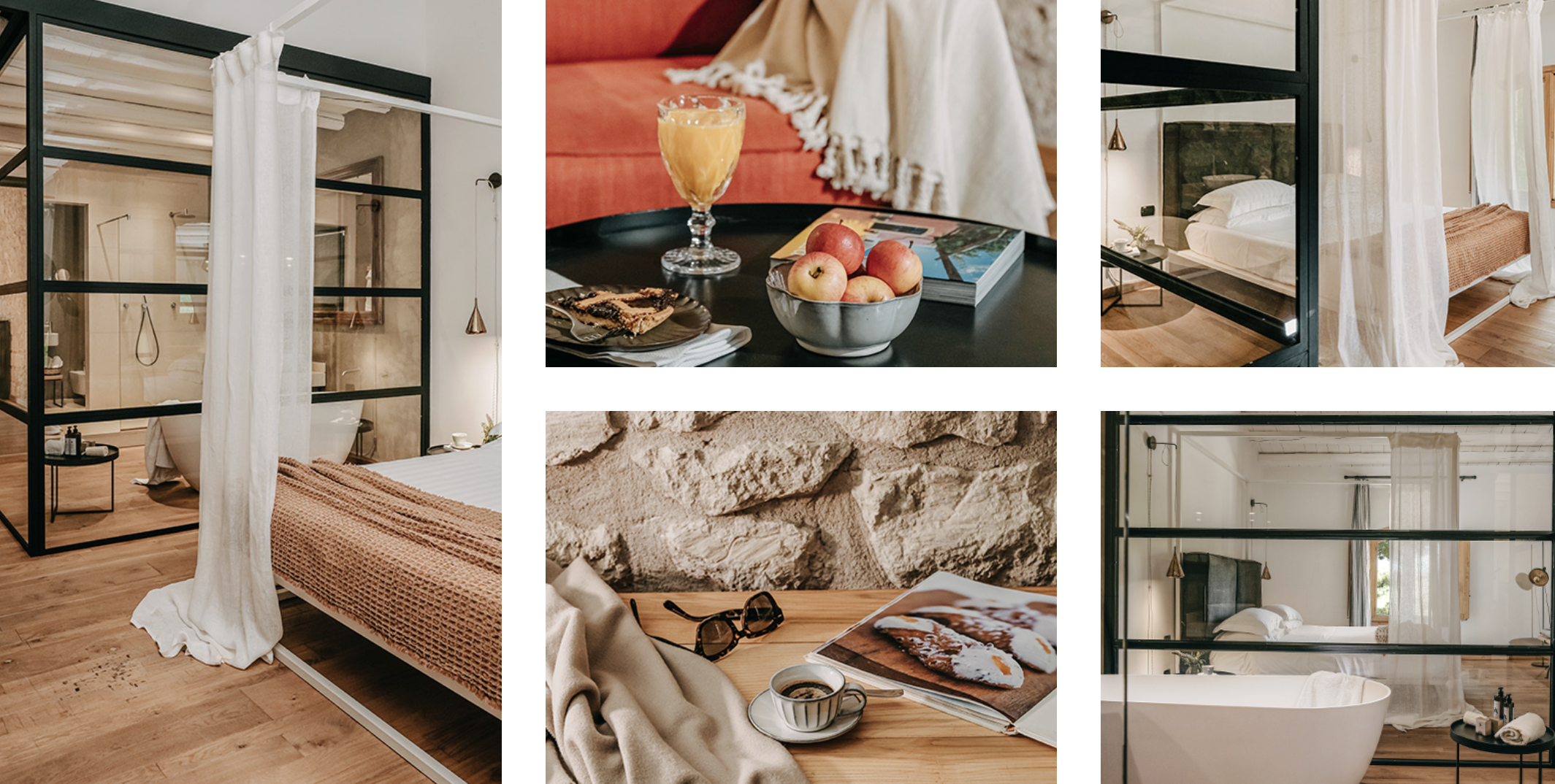
The hotel’s beauty lies in its restraint: faded stone, linen, timber, shadow and the soft colors of the surrounding countryside. It offers an alternative to Sicily’s grand coastal hotels, revealing the island through work, food and the quiet rituals of rural life.
Susafa also brings a necessary intimacy to the list. Its appeal does not depend on dramatic new architecture, but on the careful preservation of a place that already belonged to the land.
Design detail to notice: The conversion of historic agricultural buildings into guest spaces without erasing their original proportions, textures or imperfections.
7. Uga Chena Huts
Yala, Sri Lanka
Uga Chena Huts occupies an unusual meeting point between tropical forest, coastal dunes and the wildlife-rich landscape surrounding Yala National Park.
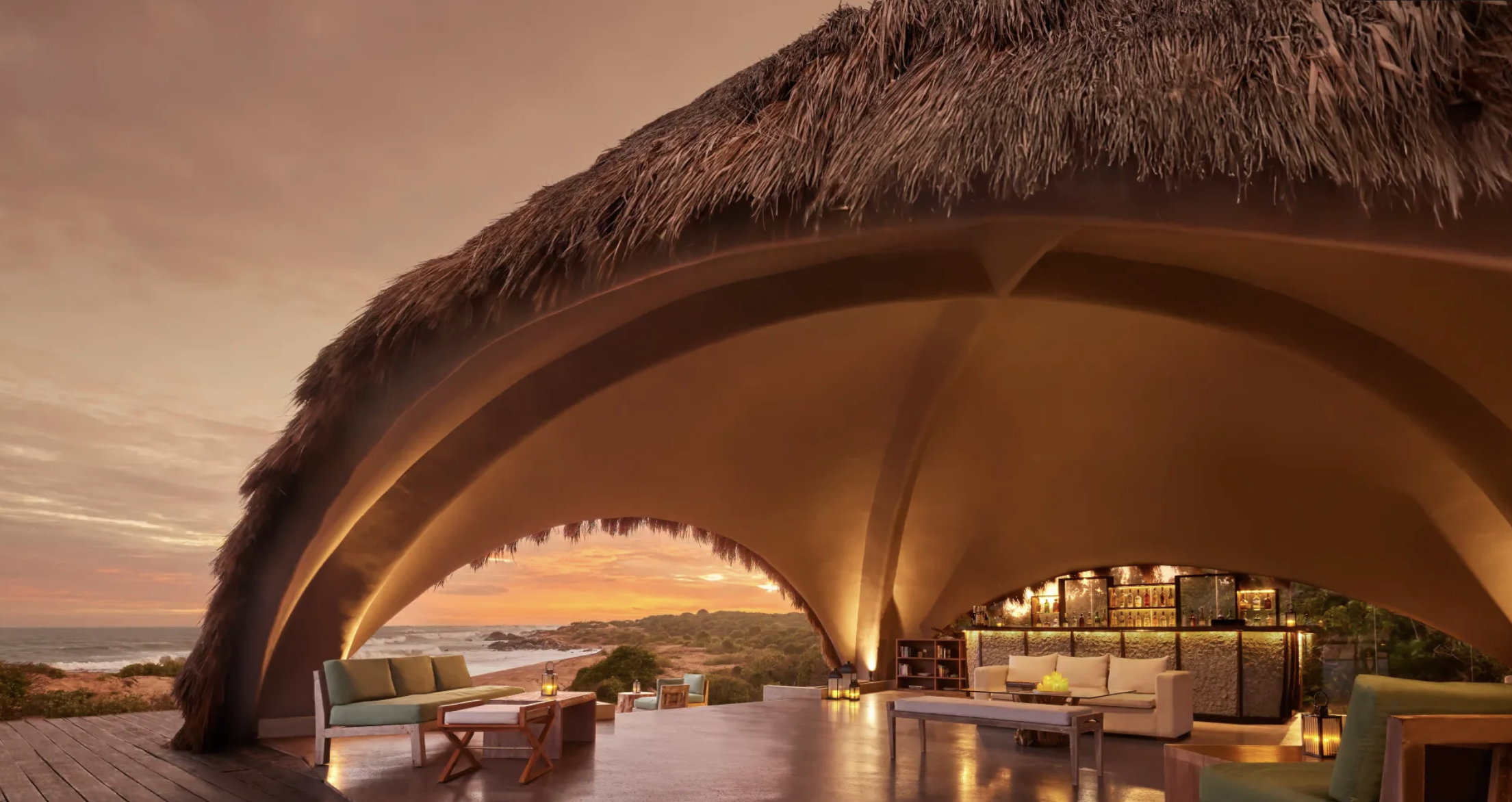
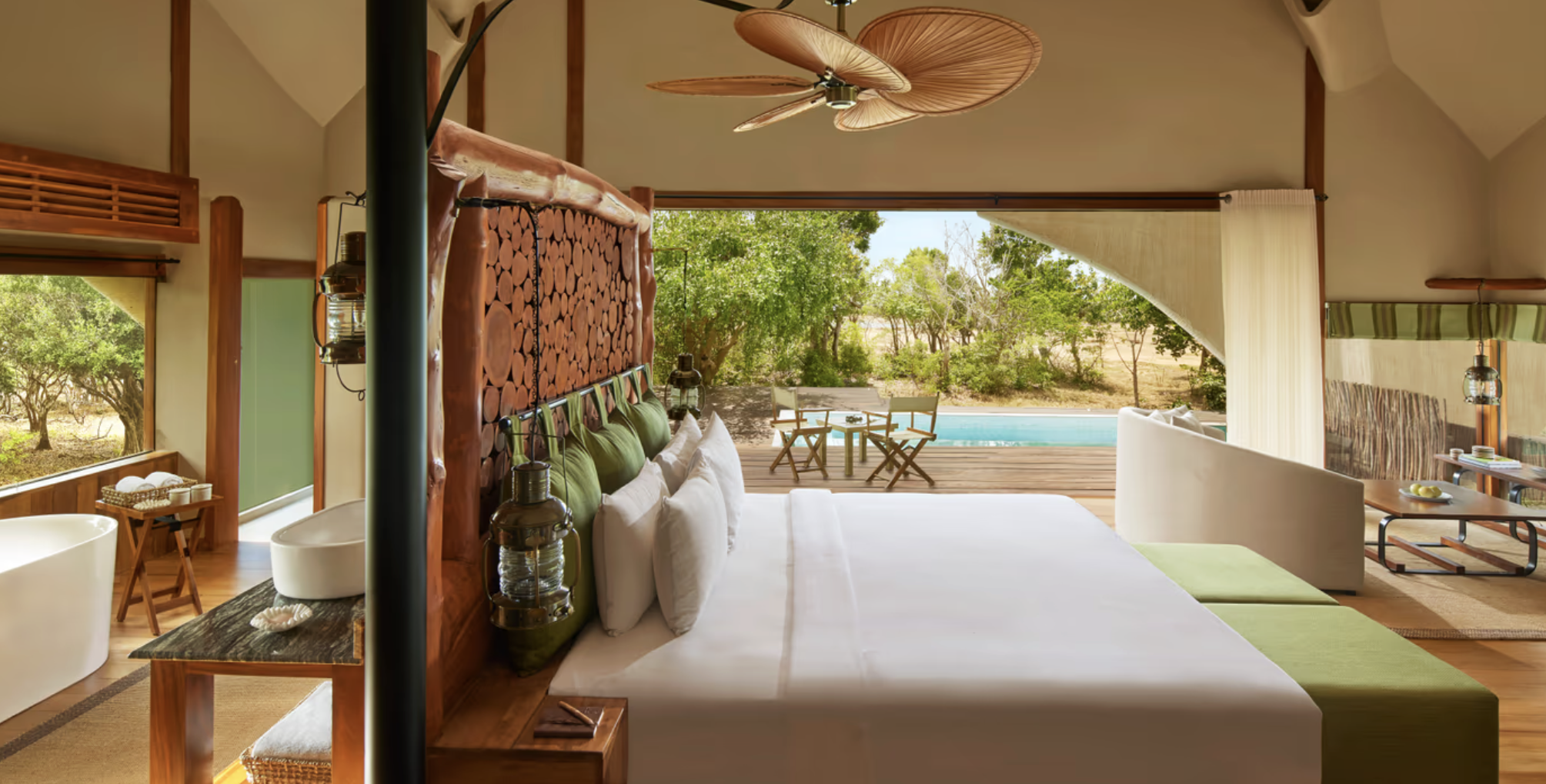
The property’s freestanding cabins are inspired by the modest shelters once used by local farmers guarding crops in small clearings known as chenas. Their rounded roofs and textured exteriors allow them to sit naturally among dense vegetation, while private decks and plunge pools create quiet places from which to watch the surrounding wilderness.
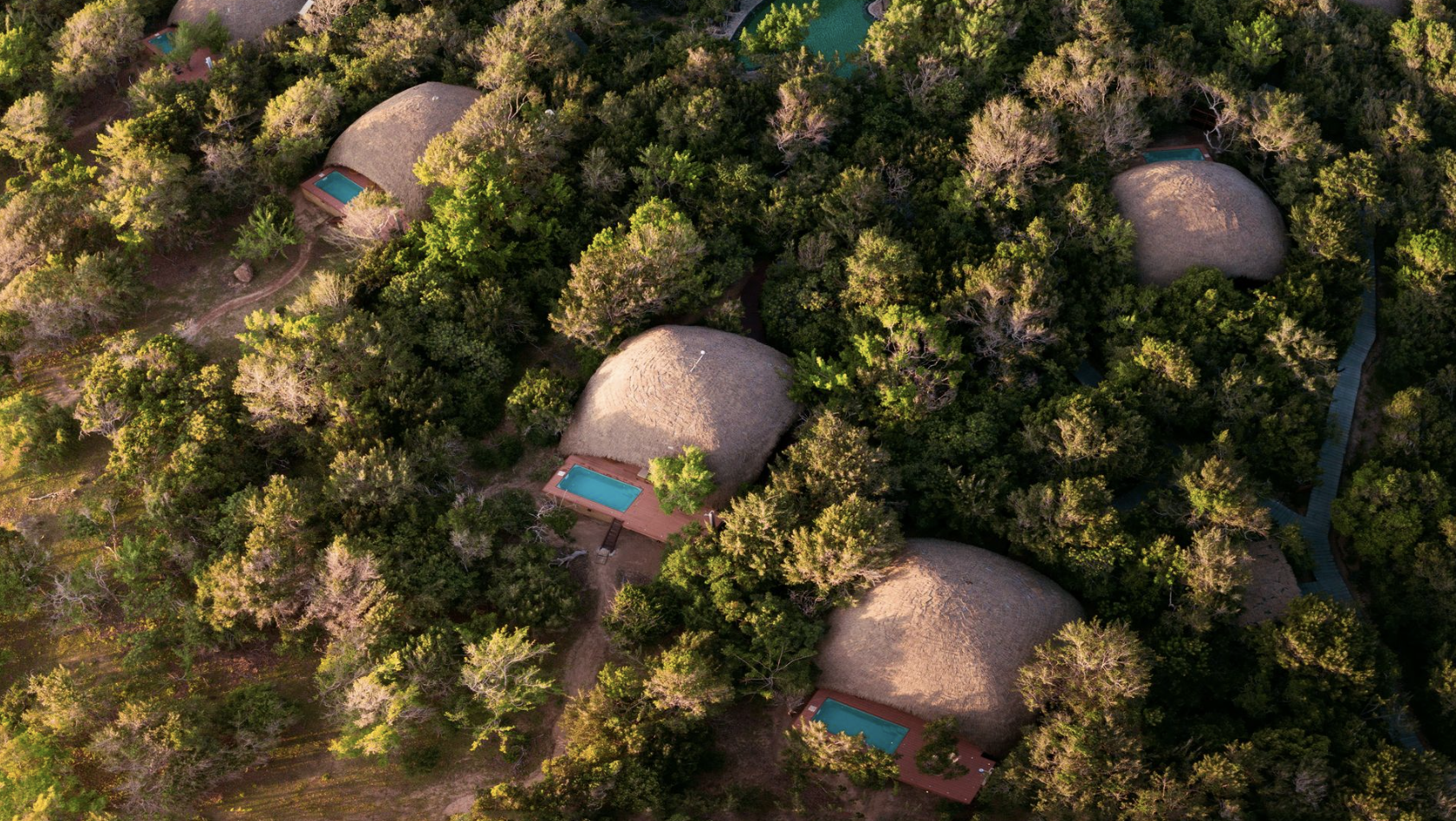
Located between Yala National Park and the Indian Ocean, the lodge is surrounded by lagoons, dunes, beachfront habitat and thick jungle. Its 18 cabins are distributed through the landscape rather than arranged in formal resort rows, preserving a sense of privacy and discovery.
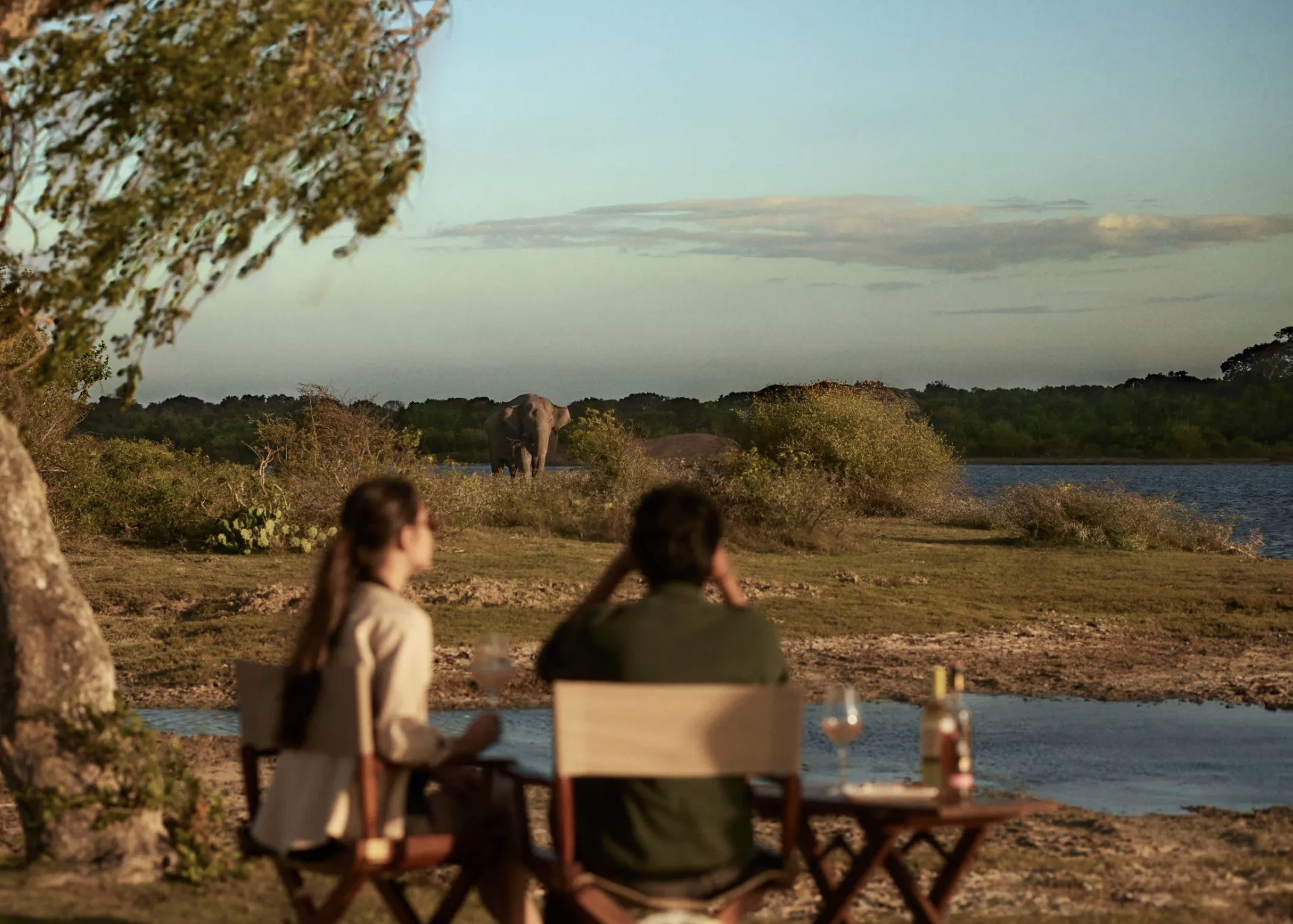
The setting is especially compelling because it refuses a simple category. This is neither purely a safari lodge nor a beach hotel. Elephants and other wildlife may pass through the surrounding environment, while the nearby sea adds another layer of movement and sound.
Chena Huts demonstrates how vernacular inspiration can be reinterpreted at a larger and more luxurious scale without losing its connection to place.
Design detail to notice: The domed, thatched cabin forms, which reference traditional chena shelters while remaining nearly concealed by the surrounding vegetation.
8. Son Blanc Farmhouse
Menorca, Spain
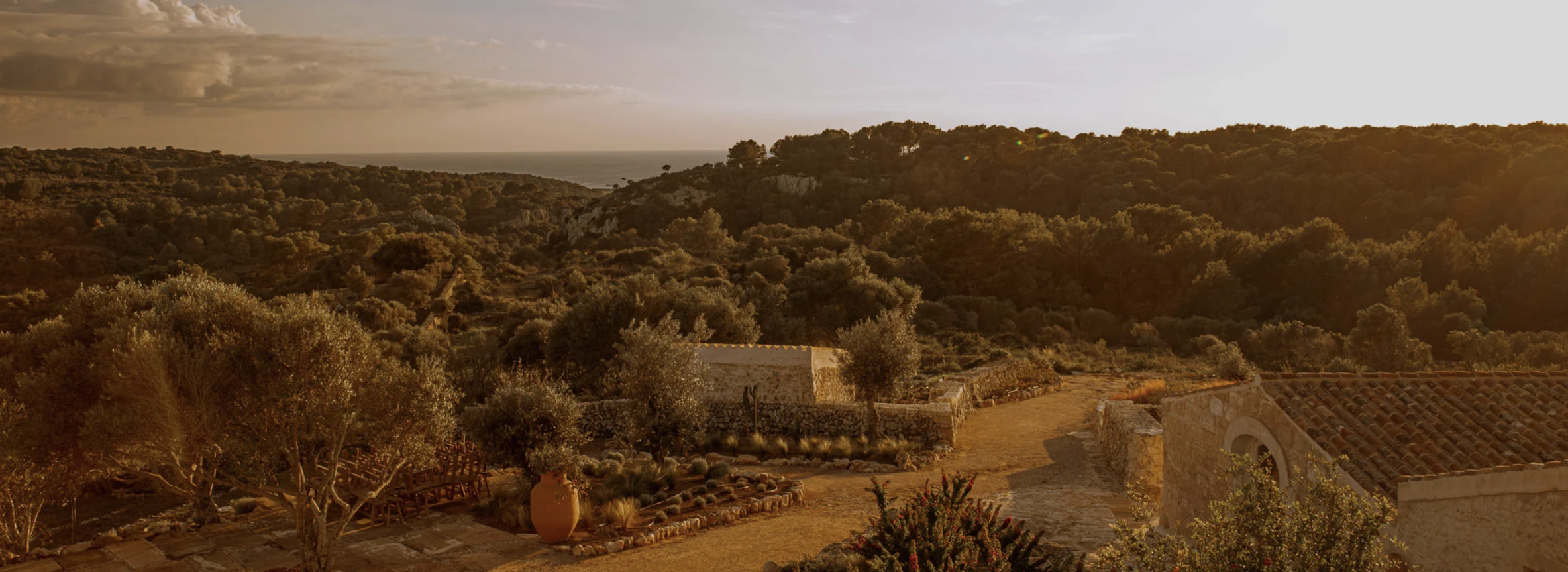
Son Blanc Farmhouse approaches hospitality as an experiment in how design, agriculture and self-sufficiency might coexist.
Set across 130 hectares in a preserved, largely wild corner of Menorca, the property centers on a restored 19th-century farmhouse surrounded by fields, woodland and cultivated land. Its 14 individually designed bedrooms combine limewashed walls, natural fibers, warm timber and commissioned works by artists and craftspeople.
The renovation, developed with architecture studio Atelier du Pont, prioritized local and natural materials, renewable-energy systems and the restoration of existing rainwater cisterns. The hotel’s farming practices, food program and water and energy goals are treated as integral parts of its design philosophy rather than separate sustainability initiatives.
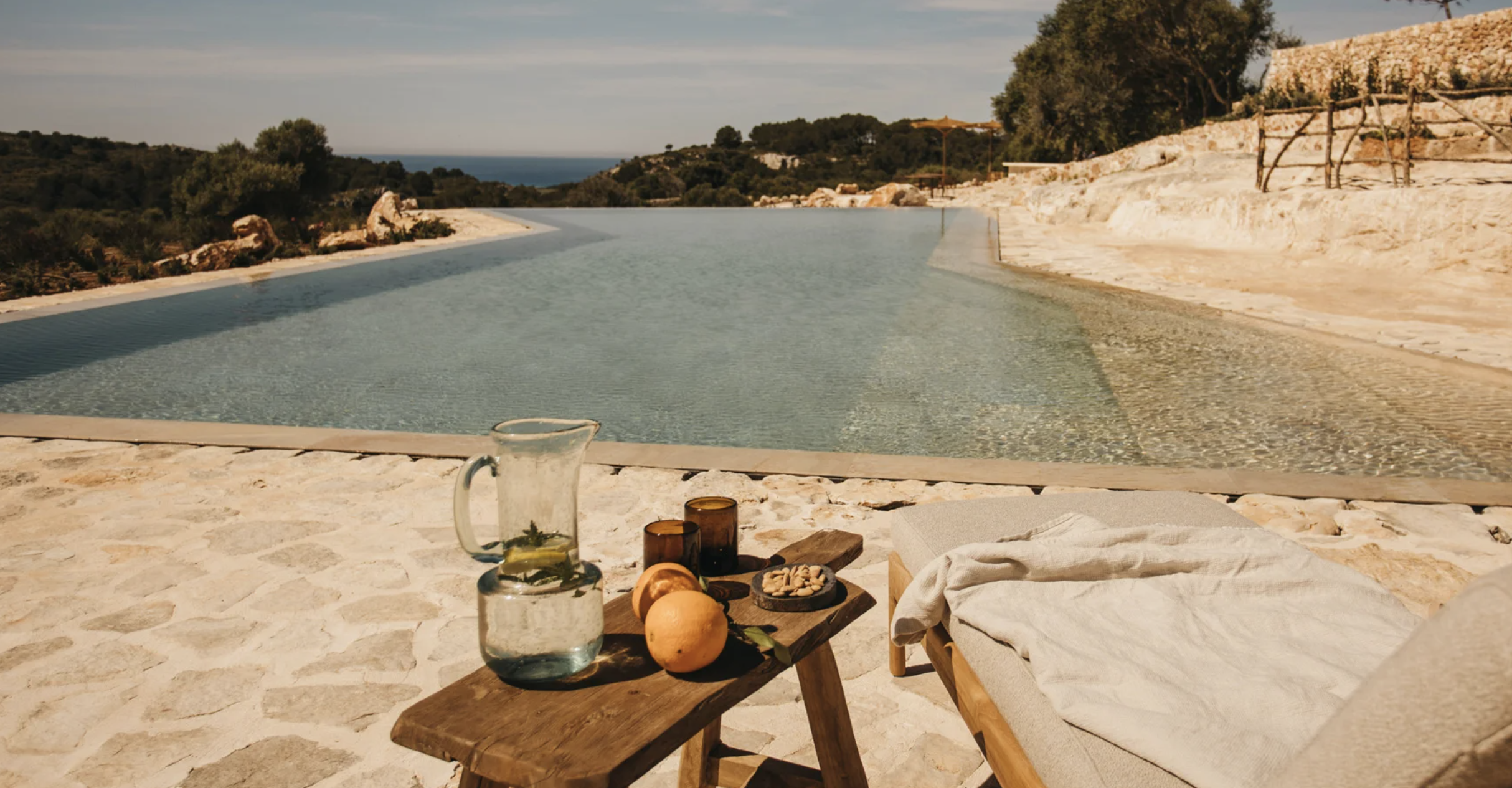
Son Blanc feels considered without being overly styled. Its rooms carry the subtle irregularities of handwork, while the surrounding landscape encourages a slower rhythm structured around walking, eating, swimming and observing the island’s changing light.
Among this collection of hotels surrounded by nature, Son Blanc is especially significant because it asks a broader question: Can a hotel become more deeply accountable to the land that supports it?
Design detail to notice: The bespoke furniture and handcrafted objects, each contributing to an interior language that feels collected rather than commercially decorated.
9. Refugia Chiloé
Chiloé Island, Chile
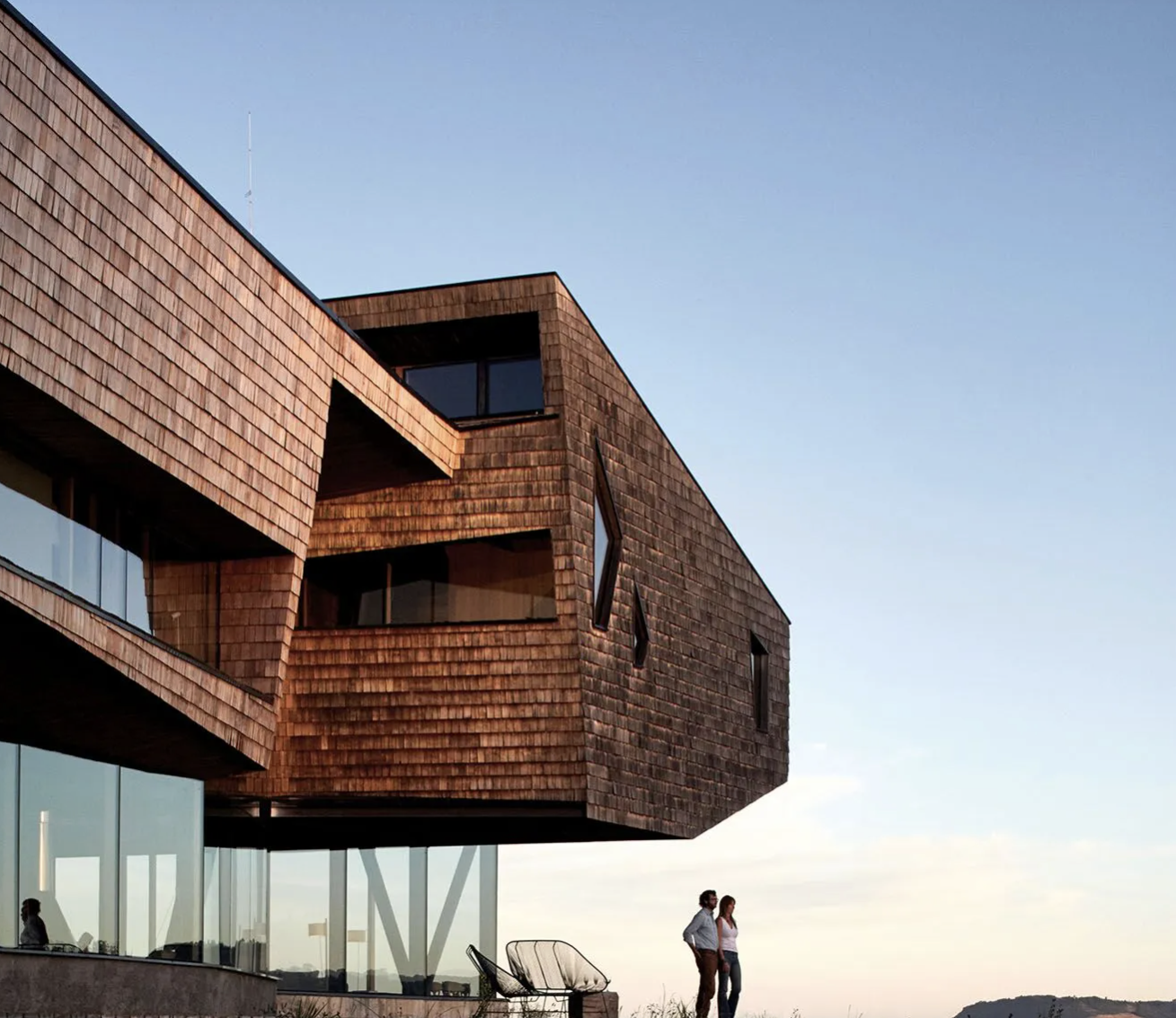
Perched above Pullao Bay on the remote Rilán Peninsula, Refugia Chiloé draws its identity from the island’s longstanding relationship with wood, water and weather.
The hotel’s elongated, timber-clad structure rests high above the inland sea, with expansive windows looking toward the archipelago and the distant volcanoes of the Andes. Inside and out, wood creates warmth against Chiloé’s cool, frequently shifting climate while connecting the contemporary building to the island’s celebrated timber architecture.
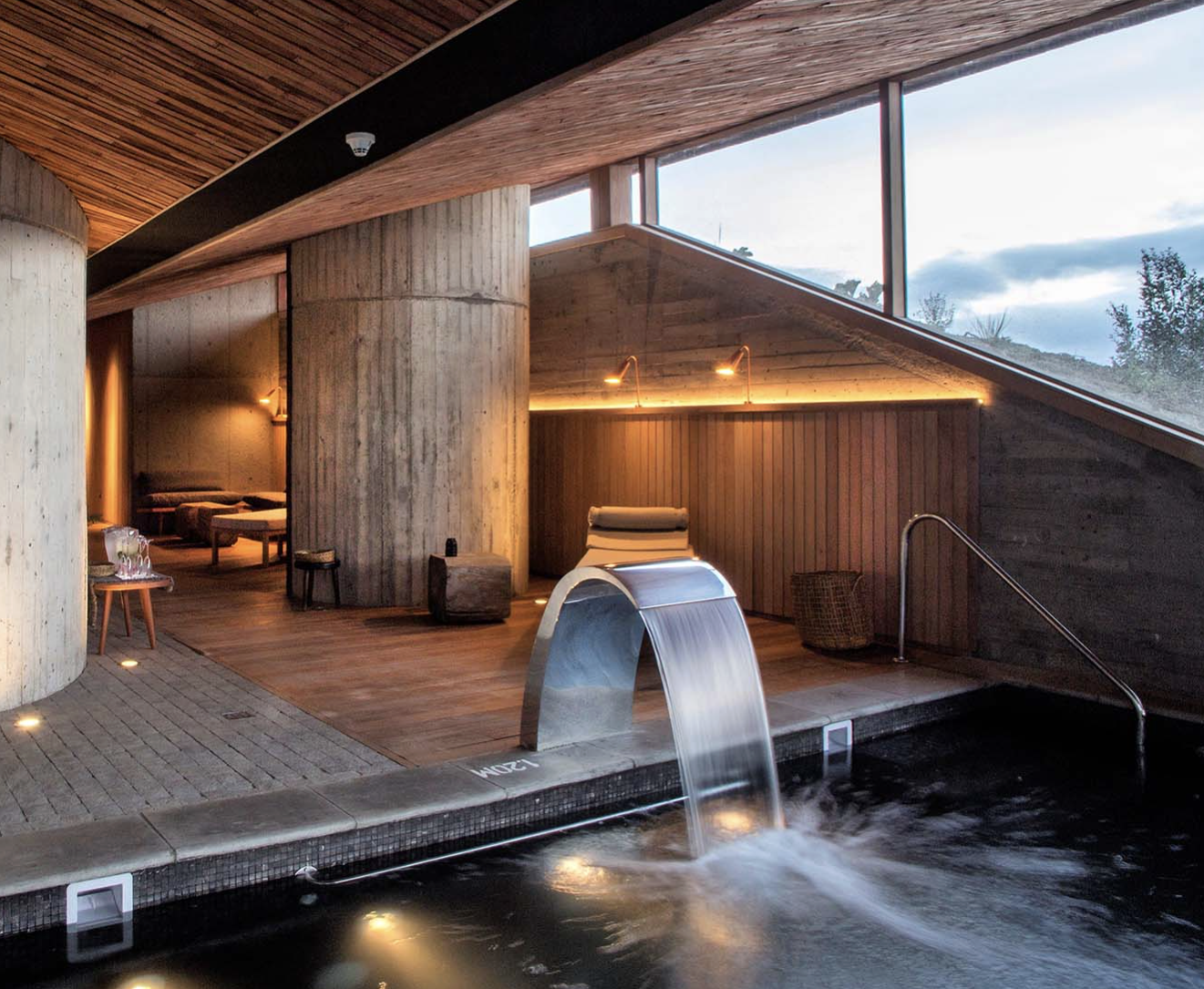
The 24-room property is architecturally dramatic, but its low profile and natural material palette prevent it from overwhelming the hilltop. The building feels shaped by the horizon, stretching horizontally across the landscape rather than rising above it.
Refugia’s relationship with place extends beyond the hotel itself. Its private boat, Williche, takes guests through the channels and islands that define the Chiloé archipelago, while excursions introduce local foodways, wetlands, villages and craft traditions.
Here, nature is not a distant spectacle viewed through glass. It is experienced through tides, fog, rain, navigation and the changing texture of the sea.
Design detail to notice: The building’s long horizontal silhouette, which mirrors the line of the bay and allows the sky and distant mountains to remain dominant.
10. The Lindis
Ahuriri Valley, New Zealand
In New Zealand’s immense Ahuriri Valley, The Lindis seems to rise from the tussock-covered ground like a natural formation.
Its low, undulating roofline mirrors the curves of the surrounding moraine and hills, allowing the lodge to settle quietly into a landscape of rugged mountains, wetlands, grasslands and beech forest. The valley includes the vast Ahuriri Conservation Park, while the lodge itself sits on the expansive Ben Avon Station.
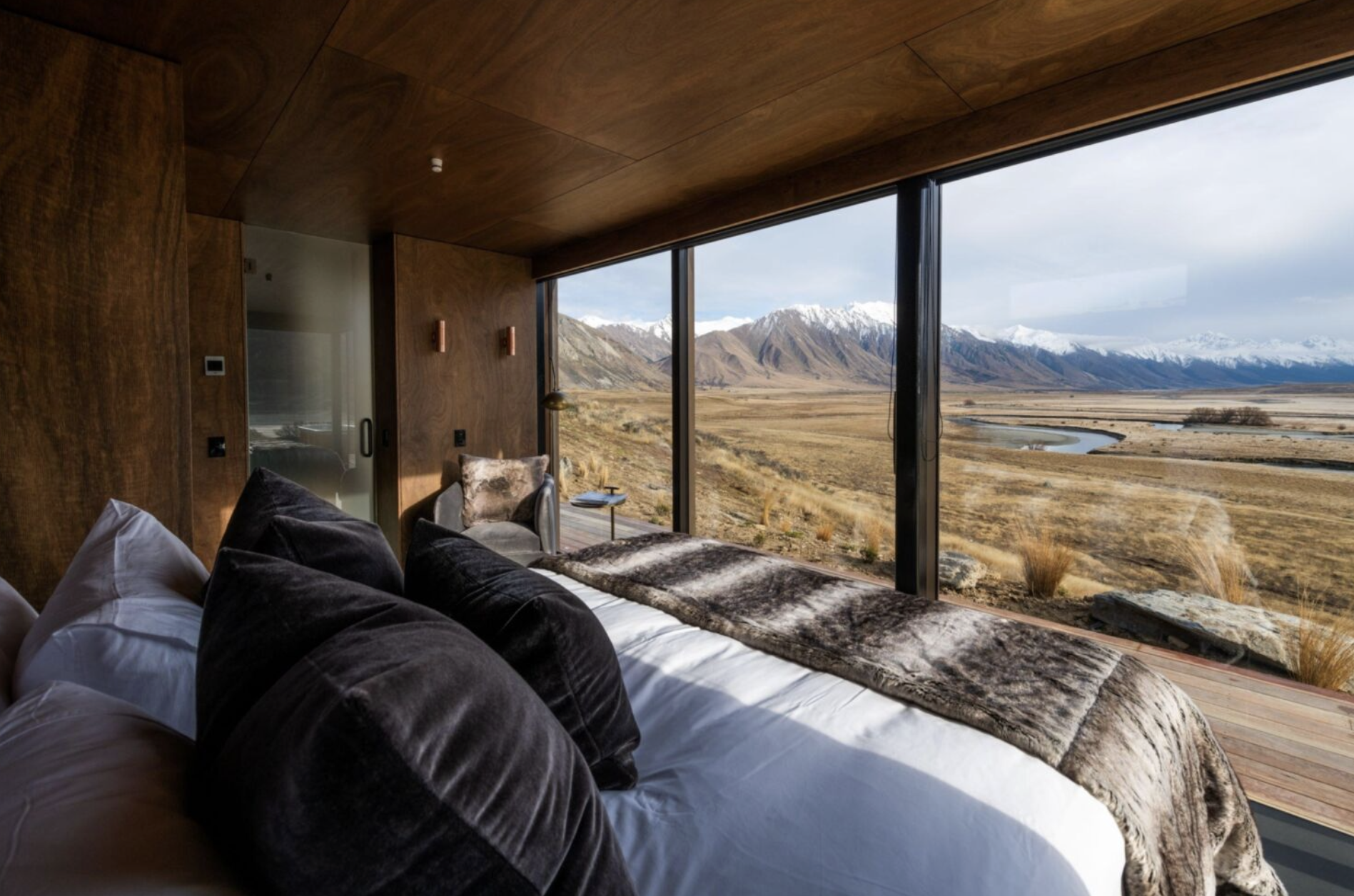
From a distance, the architecture is almost difficult to distinguish from the earth. Up close, glass walls frame the braided Ahuriri River and the constantly changing light of New Zealand’s high country. Stone, timber and earth-toned materials carry the landscape indoors without resorting to literal imitation.
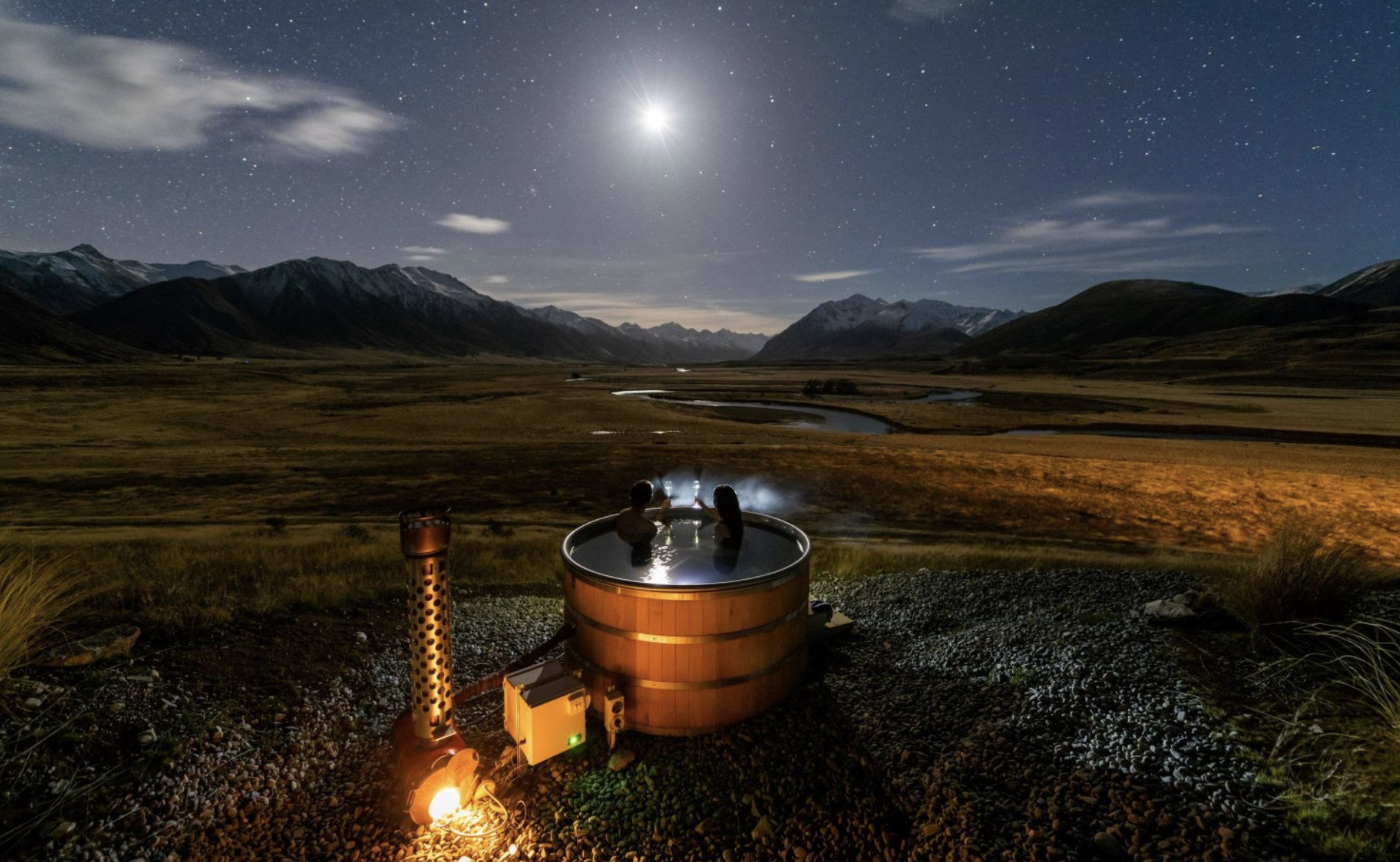
The setting is among the most purely wild in this collection. There is little visible development, and the scale of the valley makes even the lodge’s most refined spaces feel small against the surrounding wilderness.
The Lindis offers a fitting conclusion because it embodies the central idea behind the best design hotels in nature: architecture can be extraordinary without demanding to be the most extraordinary thing in view.
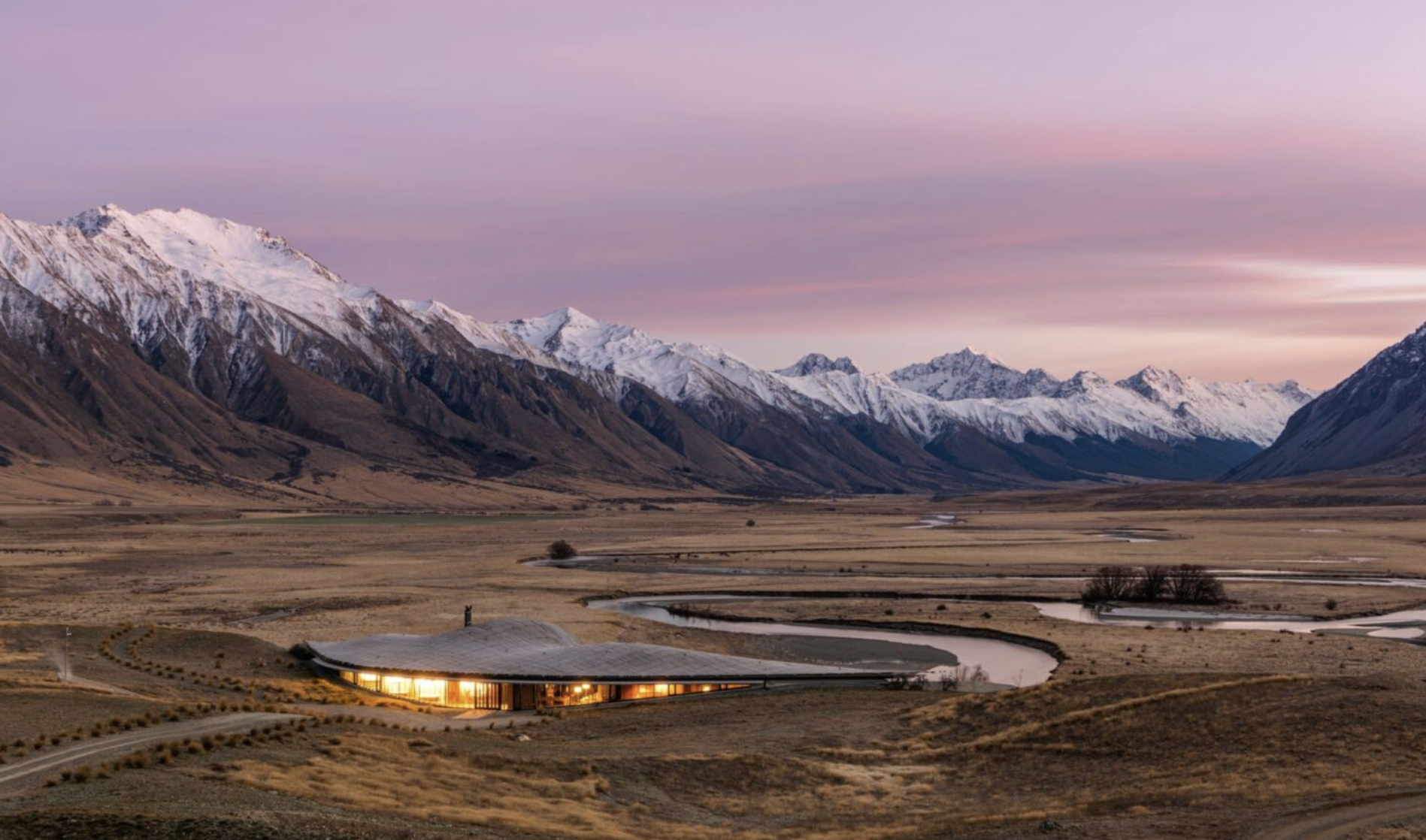
Design detail to notice: The sweeping roofline, which follows the contours of the valley and makes the lodge appear embedded within the land.
When Architecture Knows When to Recede
The hotels on this list do not share a single aesthetic. Some are made of glass and dark timber; others are shaped from stone, bamboo, thatch or the preserved walls of old farm buildings. Some nearly disappear. Others remain expressive and sculptural.
What connects them is attention.
They respond to topography instead of flattening it. They frame trees rather than clearing them. They draw from local building traditions, agricultural histories and natural materials. At their best, they also contribute to something beyond the guest experience: forest restoration, wildlife protection, regenerative farming, cultural continuity or the preservation of rural livelihoods.
This does not mean that every property is environmentally perfect, nor that beautiful architecture alone makes tourism sustainable. But these hotels offer a more thoughtful model—one in which design begins by listening to the landscape.
Because the most meaningful places to stay do more than bring us closer to nature. They remind us that we are already part of it.