Brooklyn’s coffee scene has always been about more than caffeine. Across the borough, cafés have become creative laboratories: part design showroom, part neighborhood salon, part roastery, part gallery, part refuge. The best of them understand that a coffee shop is not just a place to order an espresso. It is a spatial experience — shaped by light, material, music, ritual, community, and the subtle art of making people want to stay.
Below are ten Brooklyn coffee shops where design is central to the experience.
1. Devoción — Williamsburg
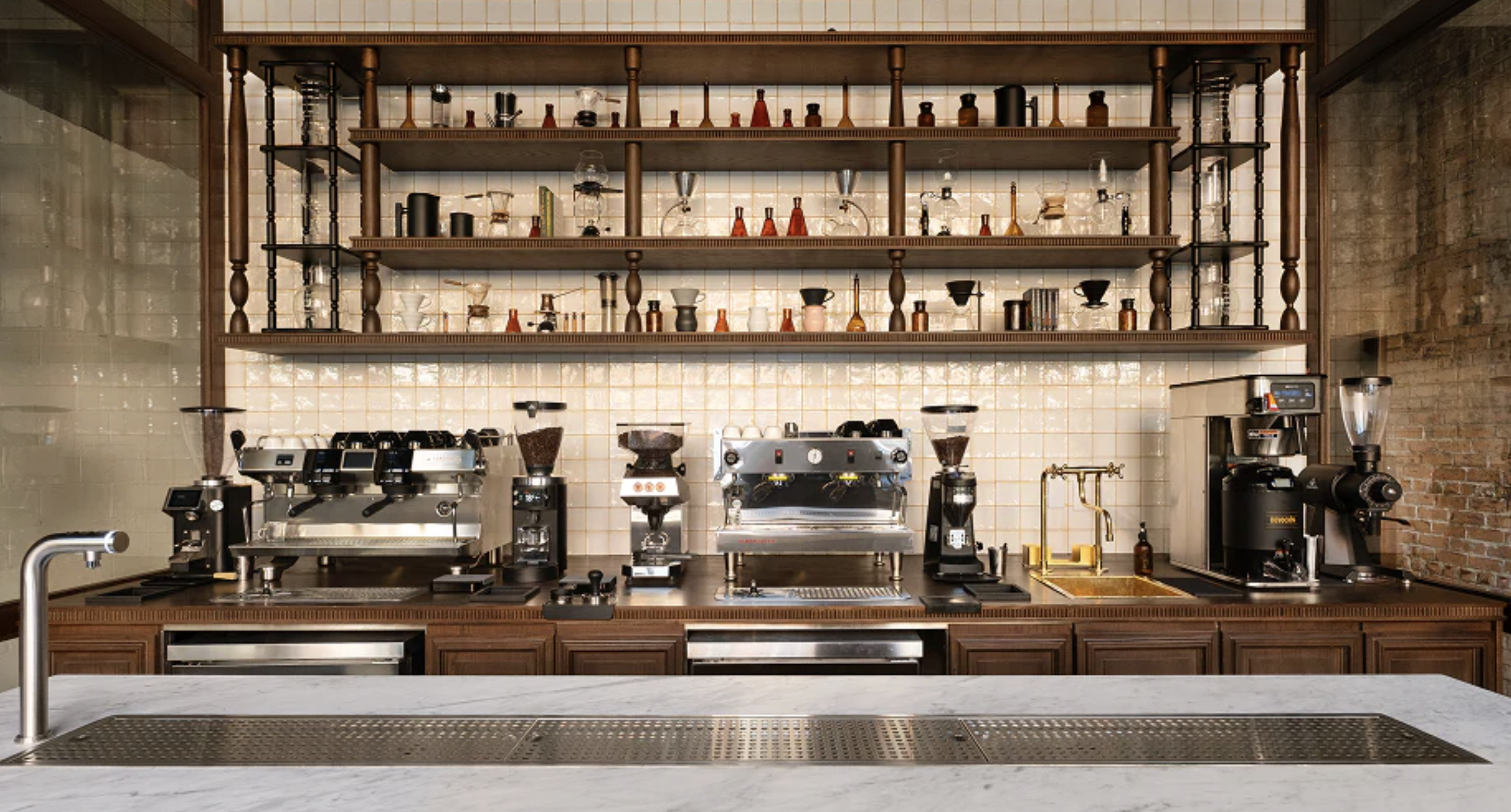
Few Brooklyn cafés feel as transporting as Devoción’s Williamsburg flagship. Set inside a dramatic industrial space, the café pairs exposed brick, steel beams, warm wood, vintage-inspired seating, and an indoor garden that softens the entire room. The result feels almost cinematic: part Colombian coffee temple, part urban greenhouse.
What makes the design especially compelling is the way it balances scale with intimacy. The soaring ceiling and skylight create drama, while the leather sofas, café tables, and plant life make the room feel deeply human. Devoción’s Williamsburg café is also one of the most recognizable coffee interiors in Brooklyn, with the brand’s own site identifying the Williamsburg location among its New York cafés.
Design detail to notice: The living wall and skylight work together to turn the space into a natural-light sanctuary.
2. Sey Coffee — Bushwick / East Williamsburg
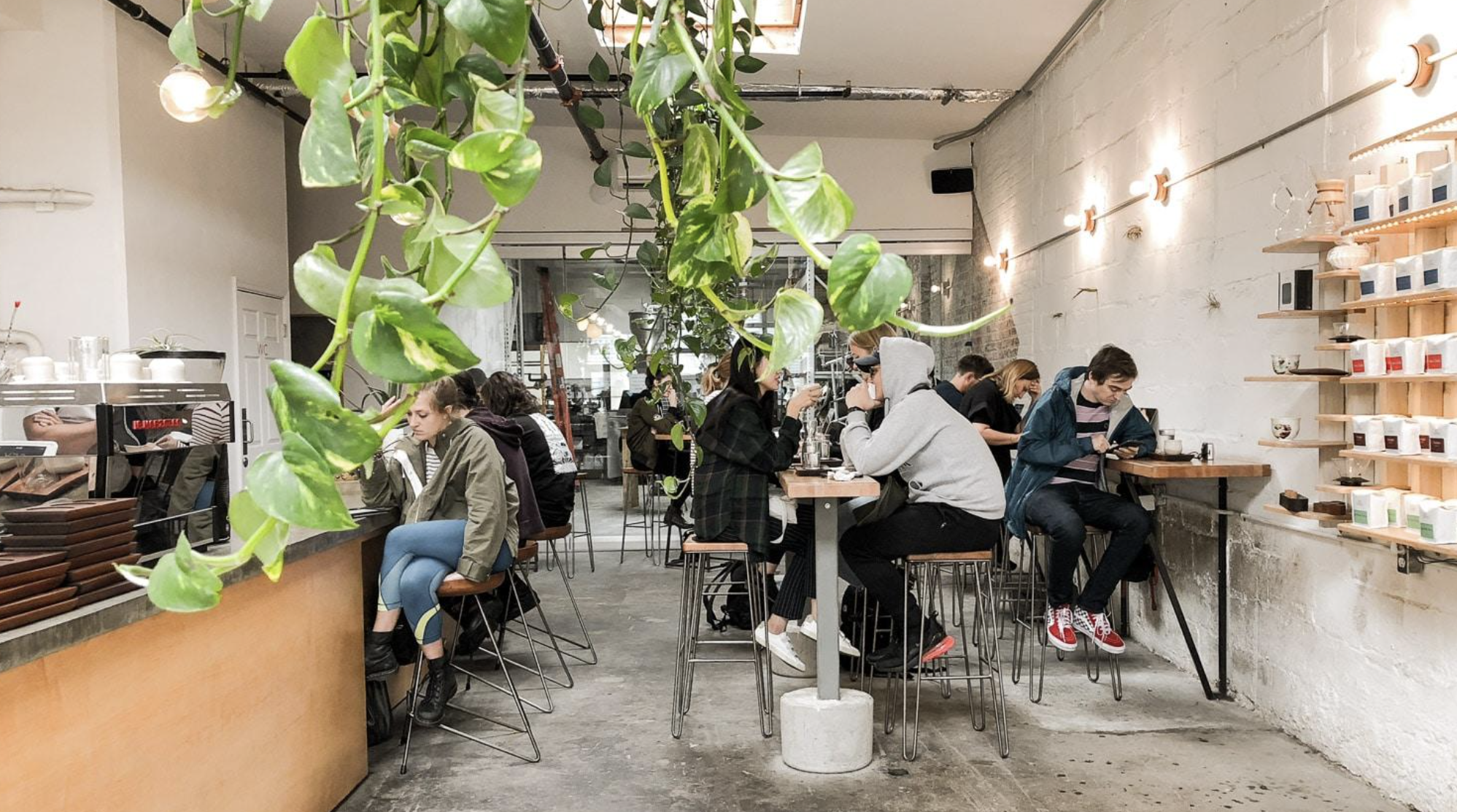
Sey Coffee takes a quieter, more restrained approach. The Bushwick roastery café is minimalist without feeling cold, using plants, skylights, exposed pipes, and a soft industrial palette to create a space that feels calm, precise, and intentional.
The design mirrors Sey’s coffee philosophy: clean, transparent, and focused. There is little visual noise, which allows the ritual of brewing and tasting to become the main event.
Design detail to notice: The plants do not feel decorative; they help soften the industrial bones of the space.
3. % Arabica — DUMBO Roastery
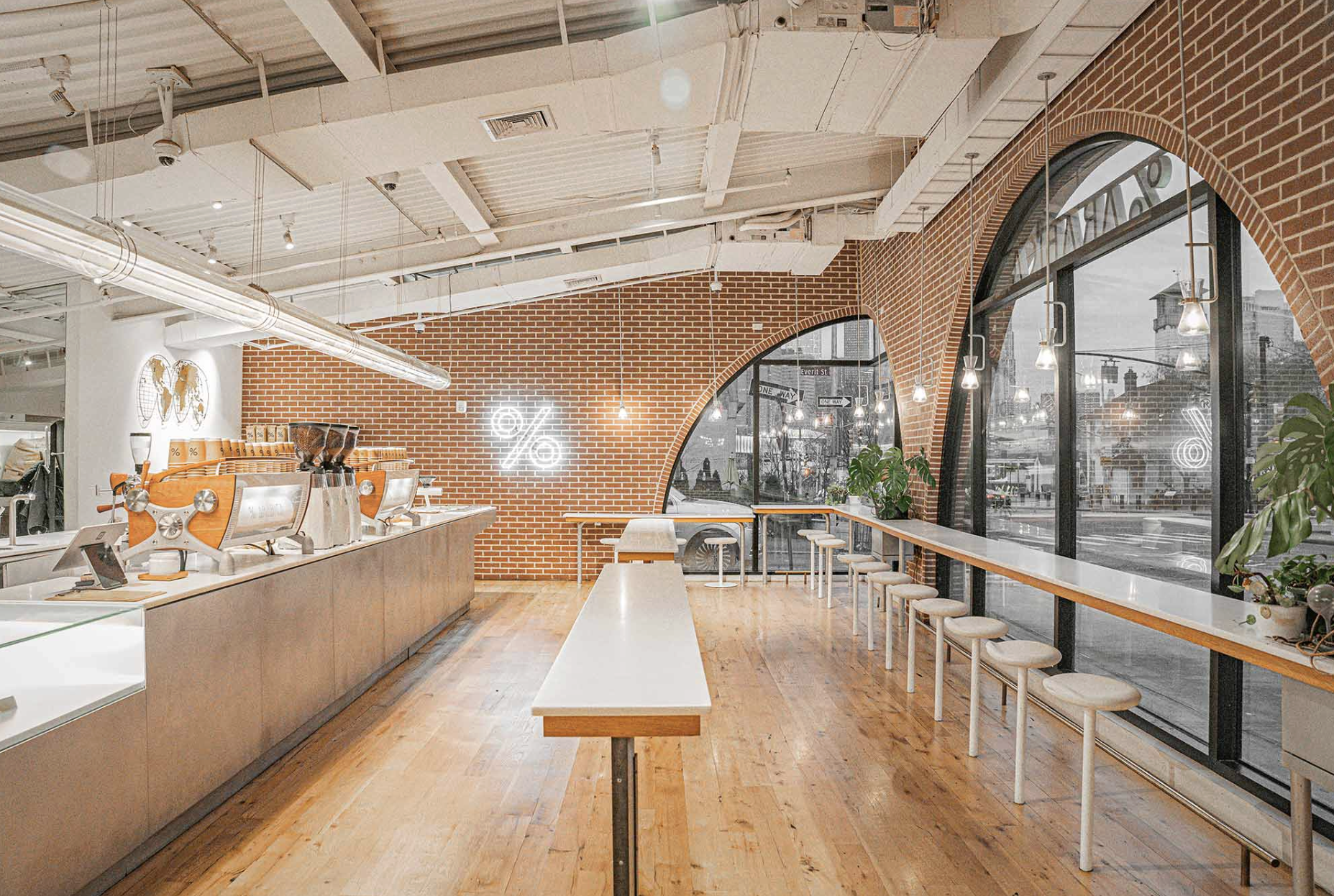
% Arabica’s DUMBO roastery is a study in place-sensitive minimalism. For the brand’s U.S. flagship, % Arabica collaborated with French design studio Ciguë, drawing from DUMBO’s brick architecture and industrial history. The shop uses orange brick tones that echo the surrounding neighborhood, along with a sculptural tube lamp over the counter and Chemex-inspired hanging lamps near the stool seating.
The result is understated but memorable: a café that feels global in its design language, yet specific to Brooklyn in its material references.
Design detail to notice: The lighting is not just functional — it becomes part of the brand’s visual identity.
4. Jamieri Kafe — Red Hook
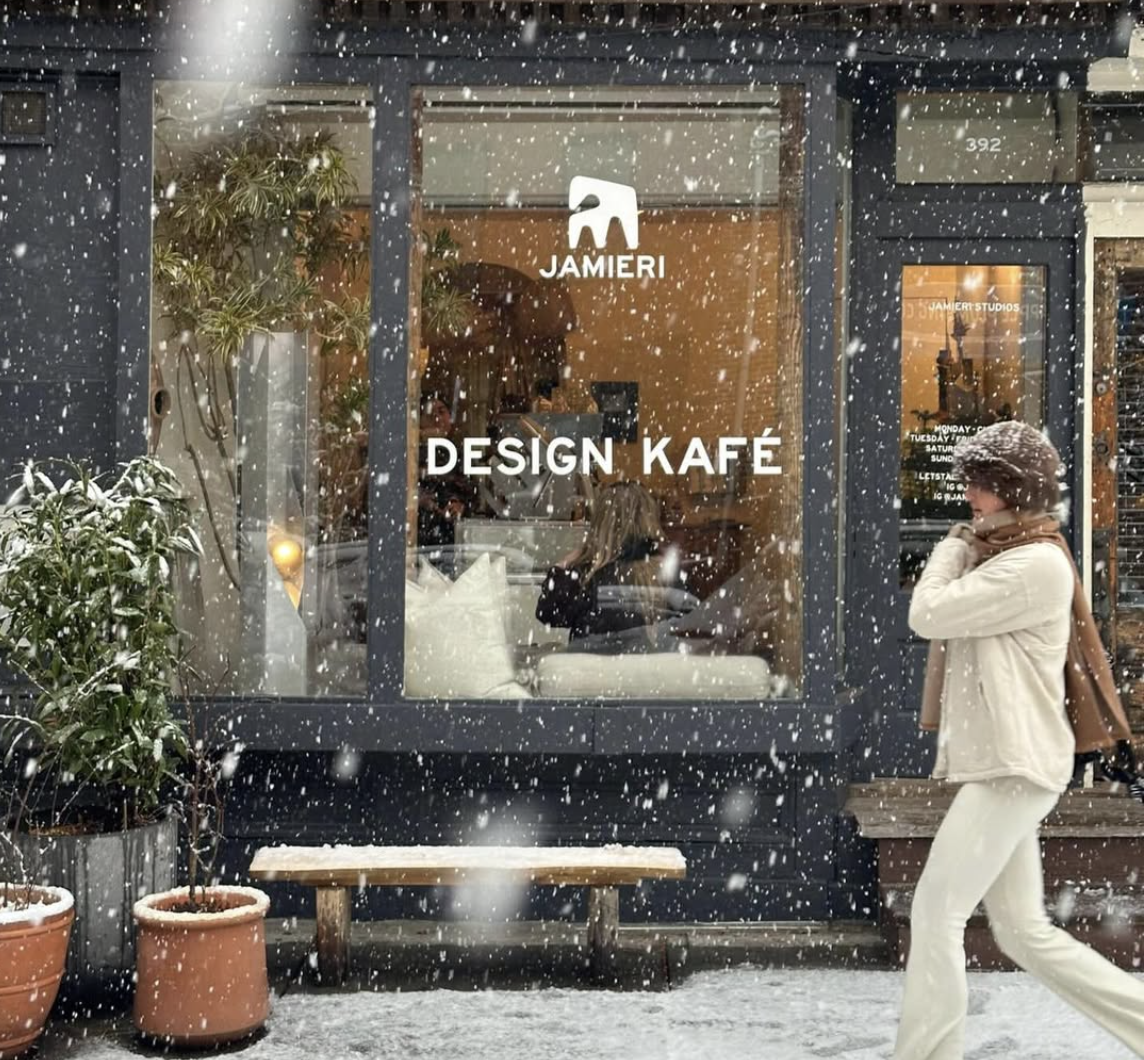
Jamieri Kafe is one of Brooklyn’s most interesting new design-led café concepts. Vogue described Jamieri as a café and design studio celebrating Georgian culture through art, interiors, food, ceramics, furniture, textiles, print, and sculpture. Opened in Red Hook, the space functions as a showroom, café, and cultural hub where nearly every object feels connected to a larger story of craft and heritage.
This is coffee as cultural immersion. Instead of treating design as a backdrop, Jamieri makes design the point: a living archive of Georgian creativity translated into a Brooklyn setting.
Design detail to notice: The objects are not props. They create the atmosphere, the narrative, and the reason to linger.
5. SEED Brklyn — Bed-Stuy
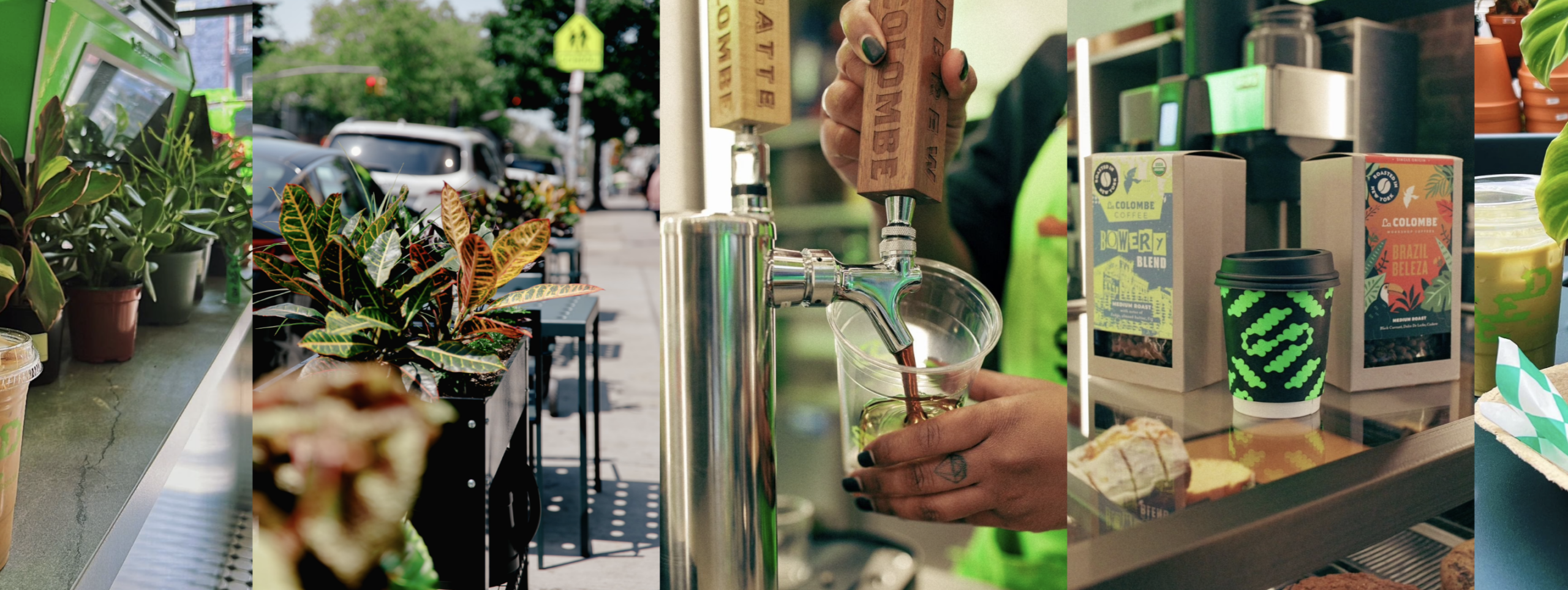
SEED Brklyn is more than a café; it is a hybrid cultural space where coffee, fashion, art, retail, and community converge. Founded by multidisciplinary artist Christophe Roberts in Bed-Stuy, the space functions as a boutique, café, and immersive art gallery — a serene, plant-filled haven where expertly crafted La Colombe coffee and specialty lattes are served alongside unique vegan Jamaican patties. The result is a sensory experience that reflects the innovative spirit of Brooklyn itself: layered, creative, community-driven, and deeply rooted in culture.
Design detail to notice: The café is integrated into a multi-sensory journey rather than separated as a standalone counter.
6. Fishs Eddy Café — DUMBO
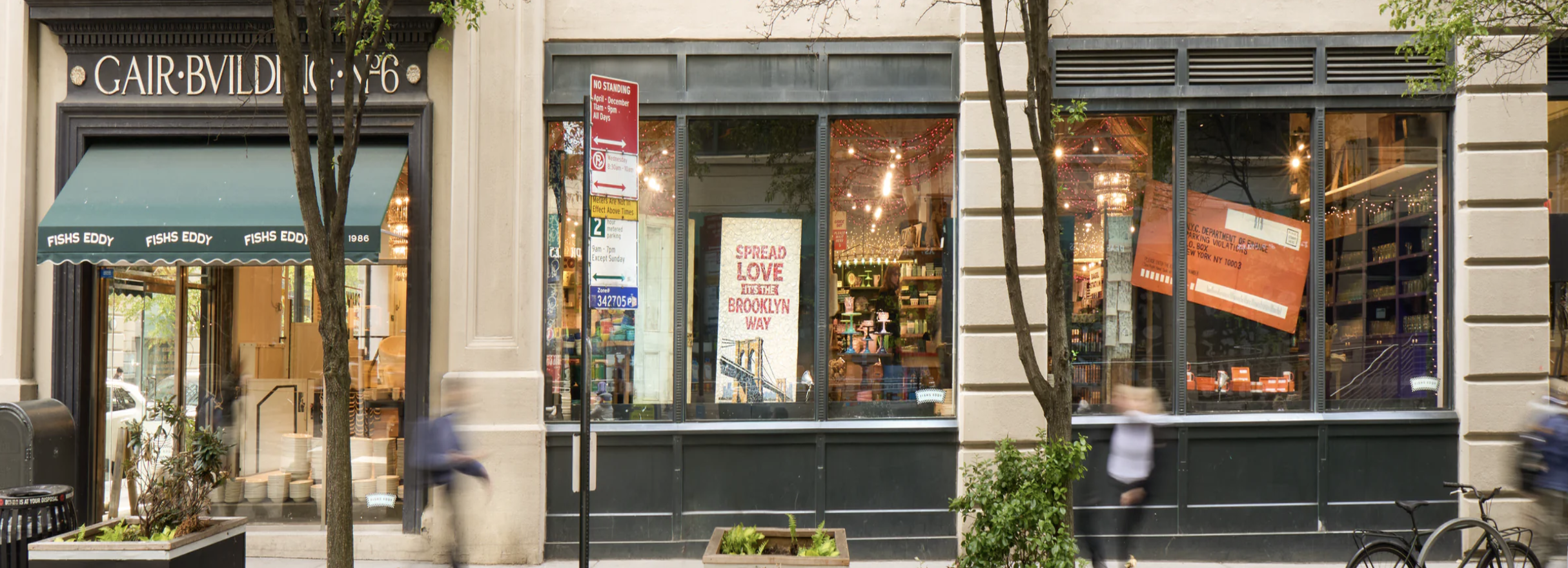
Fishs Eddy Café brings a witty, design-obsessed spirit to DUMBO’s coffee scene. Located inside the iconic New York dishware brand’s Brooklyn store, the café feels less like a conventional coffee shop and more like a love letter to everyday objects, old New York, and the pleasure of lingering among beautifully eccentric things. The 3,800-square-foot DUMBO location includes Fishs Eddy’s first-ever café, serving coffee, cappuccinos, egg creams, and nostalgic treats alongside the brand’s signature shelves of graphic plates, glassware, and vintage-inspired tableware.
What makes the space innovative is its sense of play. Instead of the now-familiar minimalist café formula, Fishs Eddy leans into personality: color, humor, pattern, nostalgia, and the visual abundance of a design shop where nearly everything tells a story. It is coffee as retail theater — casual, clever, deeply New York, and perfectly suited to Brooklyn’s appetite for spaces with character.
Design detail to notice: The café works because the merchandise is part of the atmosphere — dishware, graphics, and objects become the visual language of the space, not just things for sale.
7. Nook — Bushwick
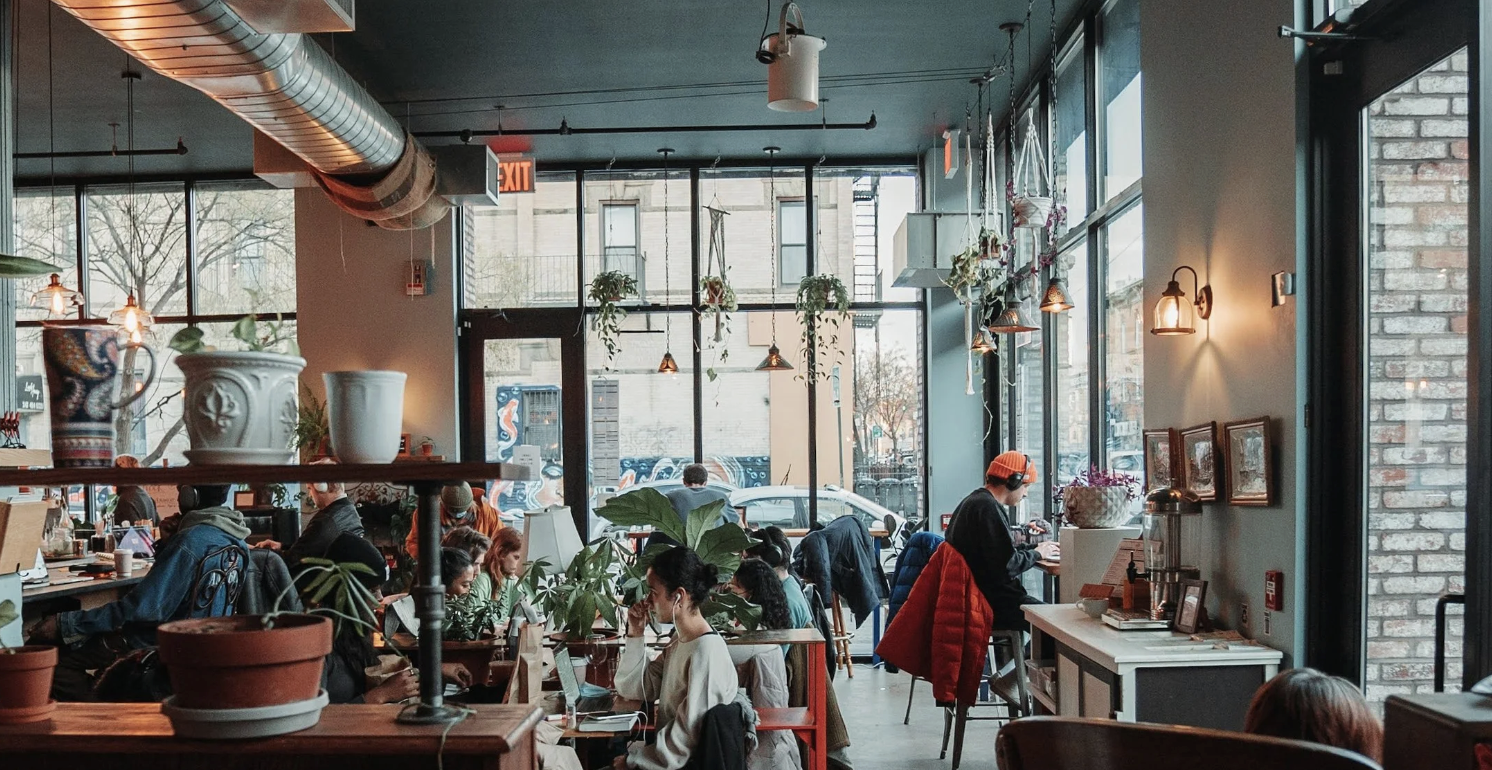
Nook is a boutique coffee & craft beer parlour — coffee and tea by day, craft beer by night, community always. Its design is more intimate than monumental, leaning into comfort, woodwork, and neighborhood warmth.
Bushwick Daily described the space as a place where remote workers settle into comfort-conscious indoor and outdoor seating, with a brick façade and floor-to-ceiling windows at the corner of Irving Avenue and Troutman Street.
Design detail to notice: The concept adapts throughout the day, shifting from café to evening gathering space without losing its identity.
8. Canyon Coffee — Prospect Heights
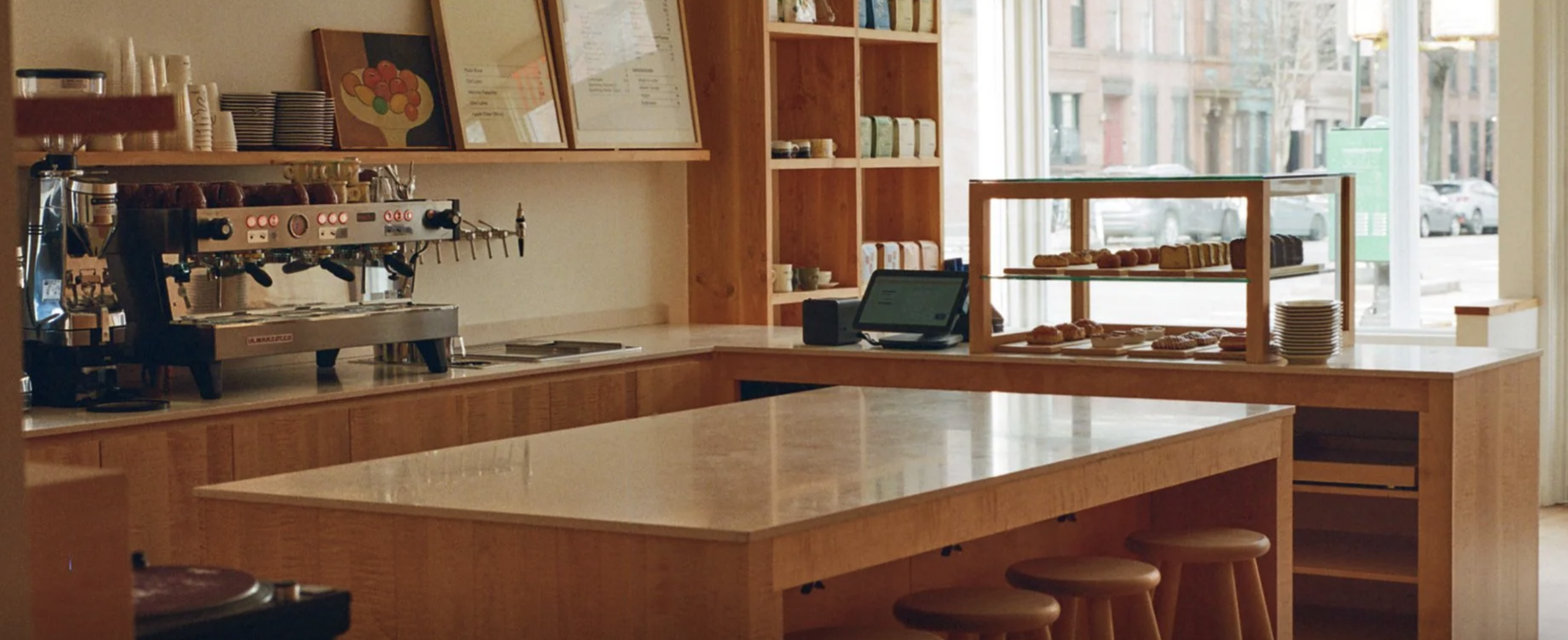
A cult-favorite Los Angeles roaster with a devoted following, Canyon Coffee brings its easygoing West Coast sensibility to Prospect Heights with a bright, beautifully composed café on Vanderbilt Avenue. The Brooklyn outpost channels the warmth of its Echo Park original through natural wood, limestone tones, and a sunlit, airy atmosphere designed for lingering rather than rushing. Known for organic coffee, thoughtful sourcing, pastries, and simple café fare like labneh toast, Canyon feels less like a grab-and-go stop and more like a neighborhood gathering place.
Design detail to notice: The warm wood, pale stone, and hand-painted mural create a soft West Coast counterpoint to Brooklyn’s historic brownstone streetscape.
9. Coffee Project New York — Fort Greene
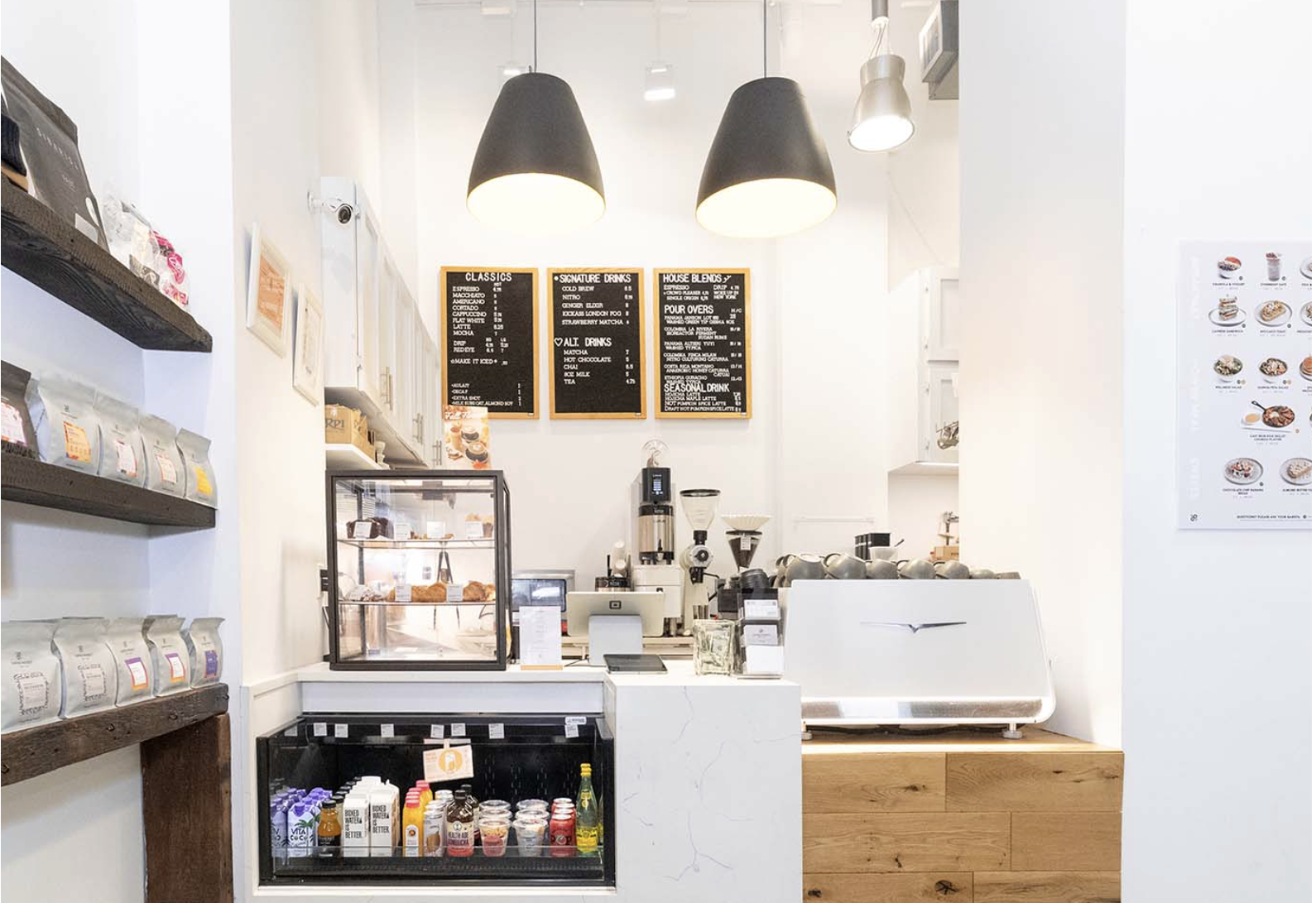
Coffee Project New York’s Fort Greene café brings a clean, elevated design sensibility to a neighborhood known for its creative energy. The café is part of a broader coffee education and roasting ecosystem.
The design is not overly decorative; it is built around clarity. Bright lighting, minimal lines, and an espresso-forward layout create the feeling of a modern coffee lab softened into a neighborhood café.
Design detail to notice: The space supports both casual coffee drinking and serious coffee learning.
10. Blue Bottle Coffee — Brooklyn Locations
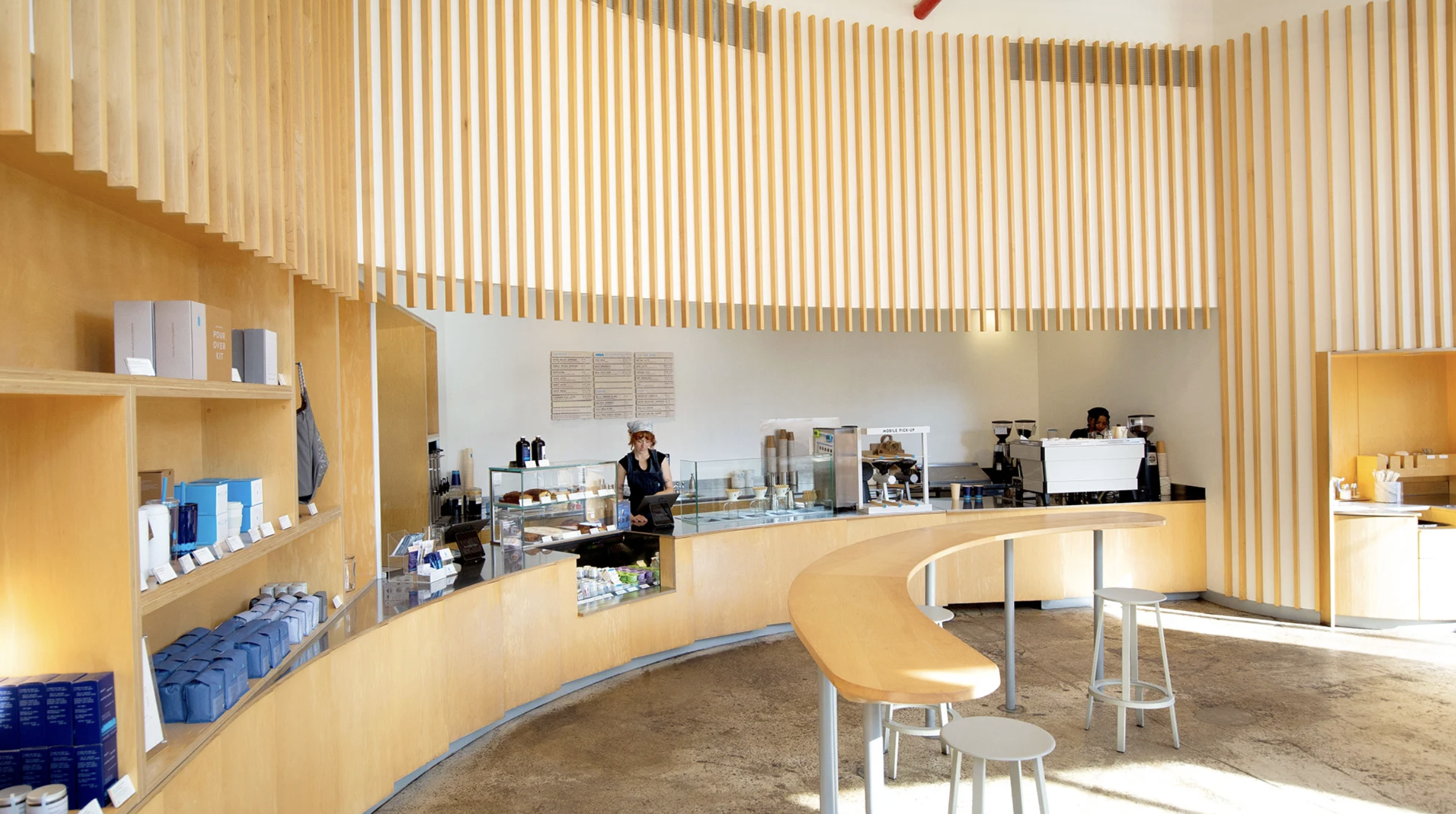
Blue Bottle may be a larger brand, but its café design remains influential. BCJ, which has worked on Blue Bottle café projects, describes the brand’s interiors as refined and welcoming, with uncluttered spaces, detailed millwork, wood slat walls, custom wood panels, doors, and seating that vary by location.
In Brooklyn, where local character matters, Blue Bottle’s design language shows how a national coffee brand can still use materiality and restraint to create a sense of place.
Design detail to notice: The best Blue Bottle interiors make coffee preparation feel almost ceremonial.
Why Brooklyn Coffee Shop Design Feels So Distinct
Brooklyn cafés are not simply borrowing from global coffee culture; they are actively reshaping it. In one borough, you can find a Colombian-inspired indoor garden, a Japanese minimalist roastery, a Georgian café-showroom, a Black-owned fashion-art-coffee concept, and an antiwar-inspired community coffeehouse.
The common thread is not one aesthetic. It is intention. These spaces ask bigger questions: What should a neighborhood café do? Who should it welcome? How should it feel? Can coffee be a bridge to art, heritage, activism, design, or community?
In Brooklyn, the answer is increasingly yes.